
Use this template
Add your own experience and make this layout yours.
Resume Example
Ella Morris
AI Researcher specializing in Generative Models and Responsible AI
[email protected] | +1 (555) 987-6543 | linkedin.com/in/ella-morris | ella-morris.ai | San Francisco, CA
Professional Summary
AI researcher with 6+ years of experience building generative models, evaluation workflows, and responsible AI review practices. Combines deep learning research with practical delivery across healthcare and language applications. Advanced in Python, TensorFlow, PyTorch, and NLP experimentation.
Work Experience
Senior Research Scientist
06/2024
Tech Company Inc
San Francisco, CA
•
Built evaluation standards and model documentation for generative AI releases, giving product, legal, and engineering teams a shared review process before deployment.
•
Reduced training time for generative models by 30% by optimizing data pipelines, distributed training settings, and GPU utilization.
•
Led development of a generative imaging model for clinical review workflows, improving anomaly detection support by 20% in internal validation.
•
Published 3 peer-reviewed papers and presented findings to research and product stakeholders to guide roadmap decisions.
Postdoctoral Research Fellow
09/2018 - 05/2024
Research Institute
San Francisco, CA
•
Researched GAN and diffusion methods for medical imaging, contributing to a patent filing and cross-functional grant work.
•
Designed and taught 5 graduate courses on responsible AI and ML experimentation for more than 100 students and researchers.
Research Assistant
08/2016 - 08/2018
Academic University
San Francisco, CA
•
Supported an AI ethics research program and co-authored 2 conference papers on transparency, documentation, and model accountability.
•
Mentored undergraduate capstone teams on dataset design, annotation quality, and experiment evaluation.
Skills
Python, TensorFlow, Keras, PyTorch, Bias Mitigation Techniques, Data Privacy Regulations, Ethical AI Principles, Transparency in Machine Learning Models
Education
Ph.D. in Computer Science - Artificial Intelligence
09/2017 - 05/2023
University of Technology
San Francisco, CA
Projects
PrivacyGuard AI Assistant
Built a privacy-focused AI assistant that flags risky app permissions, summarizes data-sharing patterns, and recommends safer settings for end users.
FairAI Chatbot
github.com/ella-morris/fairai-chatbot
Created an open-source chatbot designed to reduce biased responses through prompt testing, response auditing, and transparent safety notes for users.
Certifications
Certified Ethical AI Practitioner
03/2025
Advanced Generative Modeling Specialist
10/2024
This resume format works well for ATS because it includes a clear and concise professional summary at the top that highlights key skills and experience relevant to Artificial Intelligence roles. The use of specific keywords such as 'AI Researcher', 'Advanced Generative Models', and 'Ethical AI Practices' enhances visibility in job search engines. Additionally, organizing educational background and work experience sections chronologically with detailed descriptions of projects and responsibilities ensures comprehensive coverage of the candidate's qualifications.
Instant Resume Score
Upload your resume for an instant ATS score and practical, role-specific improvements.
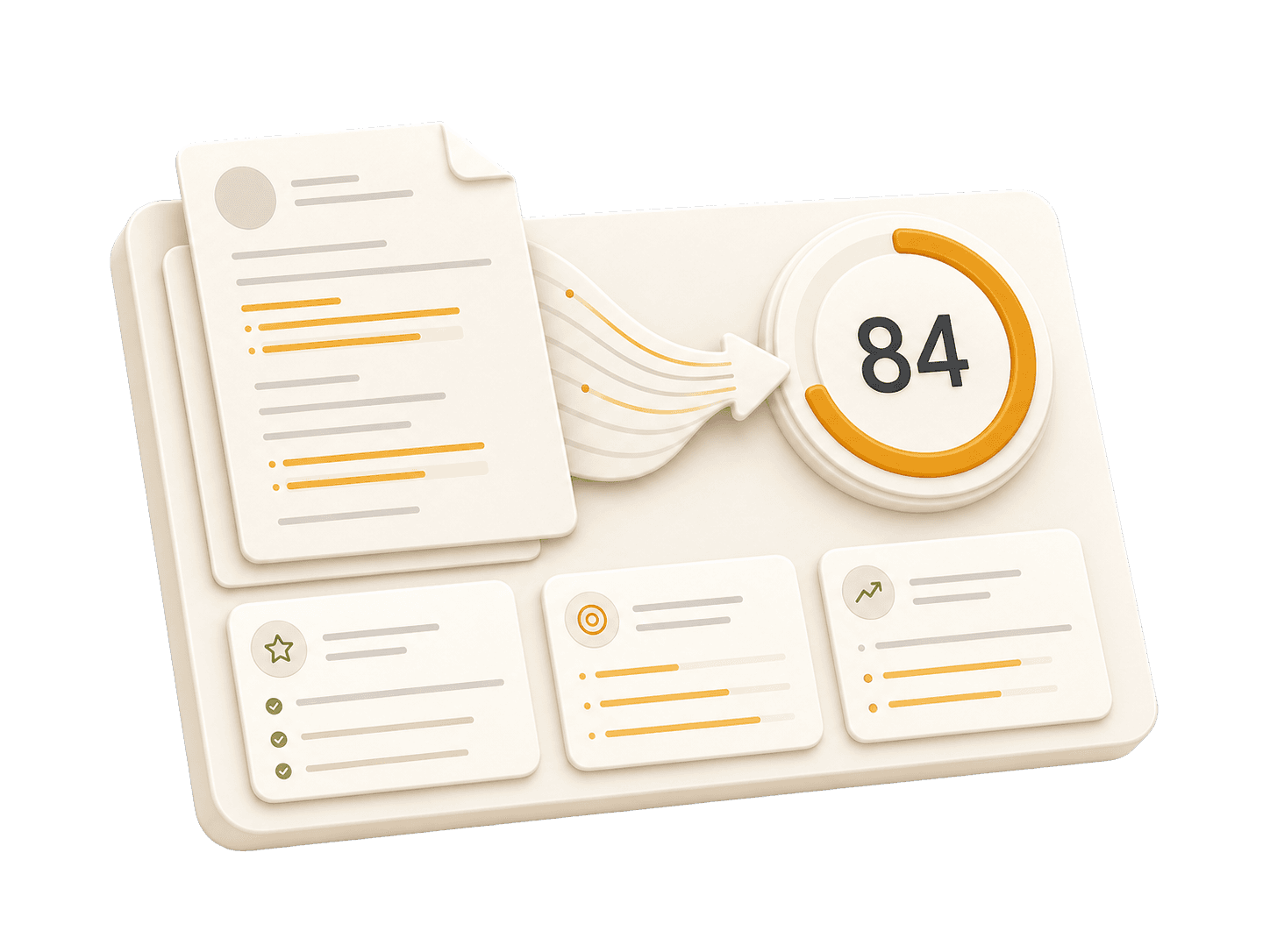
Add your resume to run a free score and get prioritized fixes.
Expert guidelines and best practices for each section of your resume.
01
First Name Last Name City, State, Zip Code Phone Number | Email Address LinkedIn Profile URL | Portfolio URL (Optional)
Your contact information is the first section recruiters see. Keep it concise and professional. Ensure your email address is appropriate (e.g., [email protected]). Include your LinkedIn profile for a comprehensive view of your professional journey. A portfolio or personal website is recommended for creative, technical, or design roles.
Do not include your full physical address (street number/name) for privacy reasons. Avoid including personal details like marital status, age, photo, or social security number unless specifically required in your country. Don't use unprofessional email addresses.
See clear examples of how to format contact details effectively.
John Doe 1234 Random St, Apt 56 New York, NY 10001 [email protected] github.com/aliciacode Single, 28 years old
John Doe New York, NY (555) 123-4567 | [email protected] linkedin.com/in/johndoe | github.com/johndoe | johndoe.dev
02
Professional Title
Result-oriented [Role Name] with [Number] years of experience in [Key Skills/Industries]. Proven track record of [Major Achievement]. Skilled in [Key Technologies/Skills]. Committed to delivering [Specific Value] for [Target Industry/Company type].
A professional summary is your elevator pitch. It should be 3-5 sentences long, summarizing your experience, key skills, and major achievements. Tailor it to the job description by using relevant keywords. Focus on what makes you unique and the value you bring to potential employers.
Avoid generic objectives like 'Looking for a challenging role to grow my career.' Recruiters want to know what value you bring to them, not what you want from them. Don't use first-person pronouns (I, me, my). Keep it concise and impactful.
Compare a weak objective with a strong professional summary.
Objective: I am a hard-working individual looking for a Artificial Intelligence position where I can learn new things and advance my career.
Senior AI Research Scientist with over 6 years of experience in deep learning and ethical AI practices. Developed a framework for ethical guidelines in generative models, enhancing transparency by 30%. Expert in TensorFlow, PyTorch, and natural language processing techniques.
03
Technical Skills
Soft Skills
Group your skills logically (e.g., Languages, Frameworks, Tools). Focus on hard skills relevant to the job. List skills in order of proficiency or relevance. Soft skills are better demonstrated through bullet points in your experience section rather than a bare list.
Do not list skills you are not comfortable using in an interview. Avoid using progress bars or percentages to rate your skills (e.g., "Java: 80%"). Do not include outdated technologies unless specifically required.
Practical example showing do's and don'ts for skills
Python, Java, C++ TensorFlow, Keras Jupyter Notebooks, GitHub
Communication Skills (50%), Problem Solving (70%)
04
Job Title | Company Name | Location Month Year – Month Year
This is the core of your resume. Use reverse-chronological order (most recent first). Start each bullet with a strong action verb. Focus on achievements and impact, not just duties. Use numbers to quantify your impact (dollars, percentages, time saved, users affected). Show progression and increasing responsibility.
Avoid passive language like 'Responsible for...' or 'Tasked with...'. Don't list every single daily task; focus on significant contributions and measurable outcomes. Avoid jargon that recruiters outside your field won't understand.
Practical example showing do's and don'ts for experiences
Responsible for conducting research on GANs, analyzing data, and writing reports.
Conducted in-depth research on GAN applications in medical imaging, leading to a 20% improvement in anomaly detection accuracy.
Taught classes on machine learning ethics and student advising.
Developed and taught graduate-level courses on ethical AI practices, reaching over 100 students and contributing to the education of future AI professionals.
05
Degree Name | University Name | Location Month Year – Month Year
List your highest degree first. If you have significant work experience, keep the education section brief. Include your GPA only if it is above 3.5 or if you are a recent graduate. Highlight relevant coursework, academic projects, honors, or leadership roles.
Do not include high school details if you have a college degree. Avoid listing every single course you took; select only the most relevant ones. Don't include graduation dates from decades ago if age discrimination is a concern in your field.
Practical example showing do's and don'ts for educations
Ph.D., Computer Science - Artificial Intelligence | University of Technology | San Francisco, CA September 2017 – May 2023
Ph.D., Computer Science - Artificial Intelligence | University of Technology | San Francisco, CA September 2017 – May 2023
06
Project Name | Tools/Technologies Used
Projects are excellent for demonstrating practical skills, especially if you lack work experience or are changing careers. Include a link to your portfolio or demo if possible. Focus on projects that show problem-solving skills and relevant tools for the target role.
Don't include trivial tutorials unless you significantly expanded on them. Avoid projects that are outdated, incomplete, or irrelevant to the role you're applying for. Don't just list technologies—explain what you created and why it matters.
Practical example showing do's and don'ts for projects
Developed a basic chatbot using Python. This project helped me understand the basics of natural language processing (NLP). I used TensorFlow to train it.
Created an open-source ethical chatbot named FairAI that ensures fairness in user interactions, utilizing ethical AI principles to prevent biased responses and promote transparency. Trained on diverse datasets to ensure equitable outcomes for all users. Used Python, PyTorch, and Jupyter Notebooks.
Another practical example showing do's and don'ts for projects
Built a simple recommendation system using collaborative filtering. It suggested products to users based on their purchase history.
Developed an advanced recommendation engine that suggests personalized content to users, leveraging deep learning models trained on user behavior data. Utilized TensorFlow and Keras for model development and integration with front-end applications.
Common questions about this role and how to best present it on your resume.
Highlight Python, deep learning, model evaluation, data handling, and clear research communication. For applied roles, it also helps to show how your work supported product or business decisions.
Emphasize research projects, publications, shipped models, and relevant coursework or certifications. Recruiters want evidence that you can design experiments and explain results clearly.
Strong resumes usually show hands-on work with frameworks like PyTorch or TensorFlow, experience with generative or predictive models, and a thoughtful approach to evaluation and responsible AI.
Use your bullet points to show bigger research scope over time, such as moving from supporting experiments to leading projects, publishing results, or setting review standards.
Create a professional, optimized resume in minutes. No design skills needed—just proven results.
Recruiters scan resumes for an average of only 6 to 7 seconds. Our proven templates are designed to capture attention instantly and keep them reading.
