
Roast My Resume
The honest resume review recruiters won't send you
Upload your resume for blunt, specific feedback: recruiter doubts, ATS red flags, and the rewrites that fix them.
- No Signup Required
- Private by Default
- Usually under 60 sec
Roast inputs
One step to your resume roast
Add your resume, pick a tone, and get the unvarnished version.
Keep improving
Tailor resumeCheck resume scoreMatch another roleHow the roast decides what to call out
Unlike a match score, there is no formula here. Your resume goes to a model with one job: find the things a recruiter would quietly hold against you, and say them plainly. What follows is the actual brief it works from.
It will not invent anything
RuleThe model is explicitly barred from inventing achievements, dates, metrics, employers, tools or credentials. Where your resume lacks evidence for a rewrite, it leaves a placeholder like [metric] for you to fill rather than making a number up.
It names what already works
RuleEvery roast returns your strongest signals alongside the problems, because the fastest way to ruin a good resume is to edit the parts that were already doing the work.
What it is told to prioritise
The roast ranks problems by how much they cost you, not by how easy they are to fix. These six are the criteria it is instructed to weigh — in that order of consequence.
- 1Recruiter screening
- 2ATS parsing
- 3Credibility
- 4Positioning
- 5Clarity
- 6Interview conversion
Tone changes the delivery, not the findings
Direct, witty, tough love and gentle all run the same analysis against the same criteria — they change how the feedback is worded, not which problems surface or how they are ranked. Pick the one you will actually read to the end. If you add context about a career switch, a seniority target or a weak spot you already know about, the roast judges your resume against that instead of a generic bar.
The score and every section score come from the model, so re-running the same resume can move the number by a point or two. Treat it as a band — strong, promising, needs work — rather than a measurement, and read the problems, which is where the value is.
Roast or resume score — which one do you need?
The resume score gives you a number and a prioritised list of fixes, in a neutral voice. It is the tool for checking where you stand and tracking whether an edit helped.
The roast is for when the score is fine and you are still not hearing back. It goes after the things a score cannot see: the claim a recruiter will not believe, the title that undersells you, the bullet that describes a duty instead of a result. Use the score to measure, the roast to find out what is actually wrong.
Check your resume scoreFrequently asked questions
- Is the feedback actually harsh?
- It is blunt, not cruel. The brief is to be specific and practical and to avoid generic advice — every problem comes with the evidence from your resume, why it matters, and a fix. If you want it softer, the gentle tone says the same things more kindly.
- Which tone should I pick?
- Direct is the default and the most useful. Tough love pushes harder on the things you are avoiding, witty makes a long list easier to get through, and gentle is worth choosing if you are already discouraged. The findings are identical; only the wording changes.
- Will it make things up about my resume?
- No. It is instructed never to invent achievements, dates, metrics, employers, tools or credentials. When it suggests a rewrite and your resume has no number to support it, you get a placeholder to fill in rather than a fabricated figure.
- What is a good roast score?
- Above 80 means the resume is working and the roast is mostly polish. Between 50 and 80 there are real problems a recruiter would notice but the foundation is sound. Below 50 usually means positioning, not wording — the resume is not making a clear case for any one role.
- Why did my score change when I ran it again?
- The score is a model judgement rather than a calculation, so an unchanged resume can move a point or two between runs. The problems it surfaces are far more stable than the number — if the same issues come back, they are real.
- Should I add extra context?
- Yes, if anything about your situation is not obvious from the resume. A career switch, the seniority you are aiming for, or a gap you already know about all change what counts as a problem. Without it the roast judges you against a general bar.
- Which file formats can I upload?
- PDF, DOCX, TXT and images, up to 20MB per file.
- Is the resume roast free?
- Yes. Running a roast and reading your score, your strengths and the first problems costs nothing and needs no account. A free Minova account opens the rest — every problem, the quick wins, the ATS issues and the recruiter concerns — and keeps your reports.
Already optimizing your career? Sign in for full access
Popular articles
Grow your career
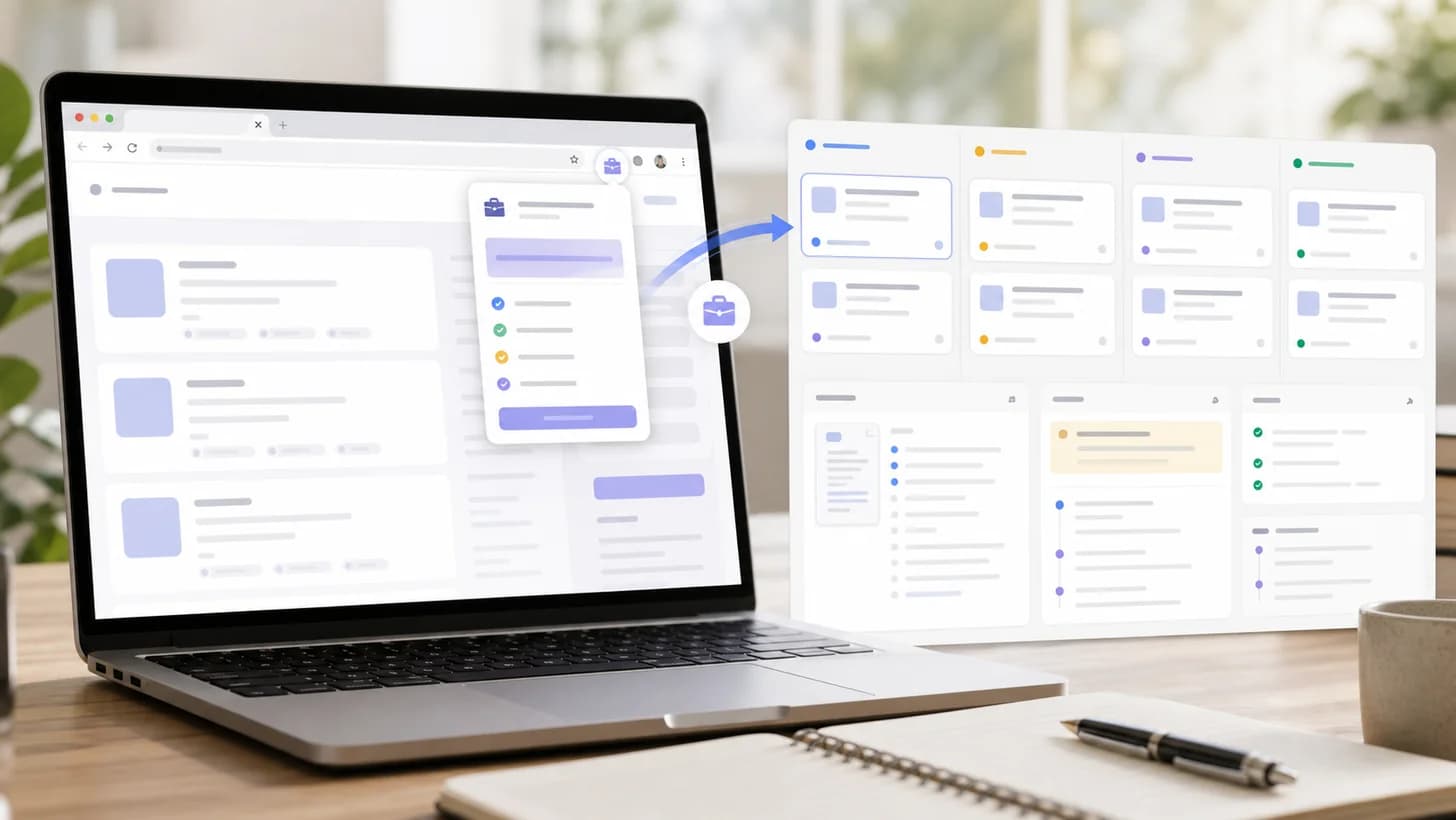
Job Tracker Extension Guide: Save Jobs and Tailor Resumes
Learn how Minova's job tracker extension saves role details, keeps applications organized, and turns job descriptions into resume-tailoring context.
by Milad Bonakdar
Author
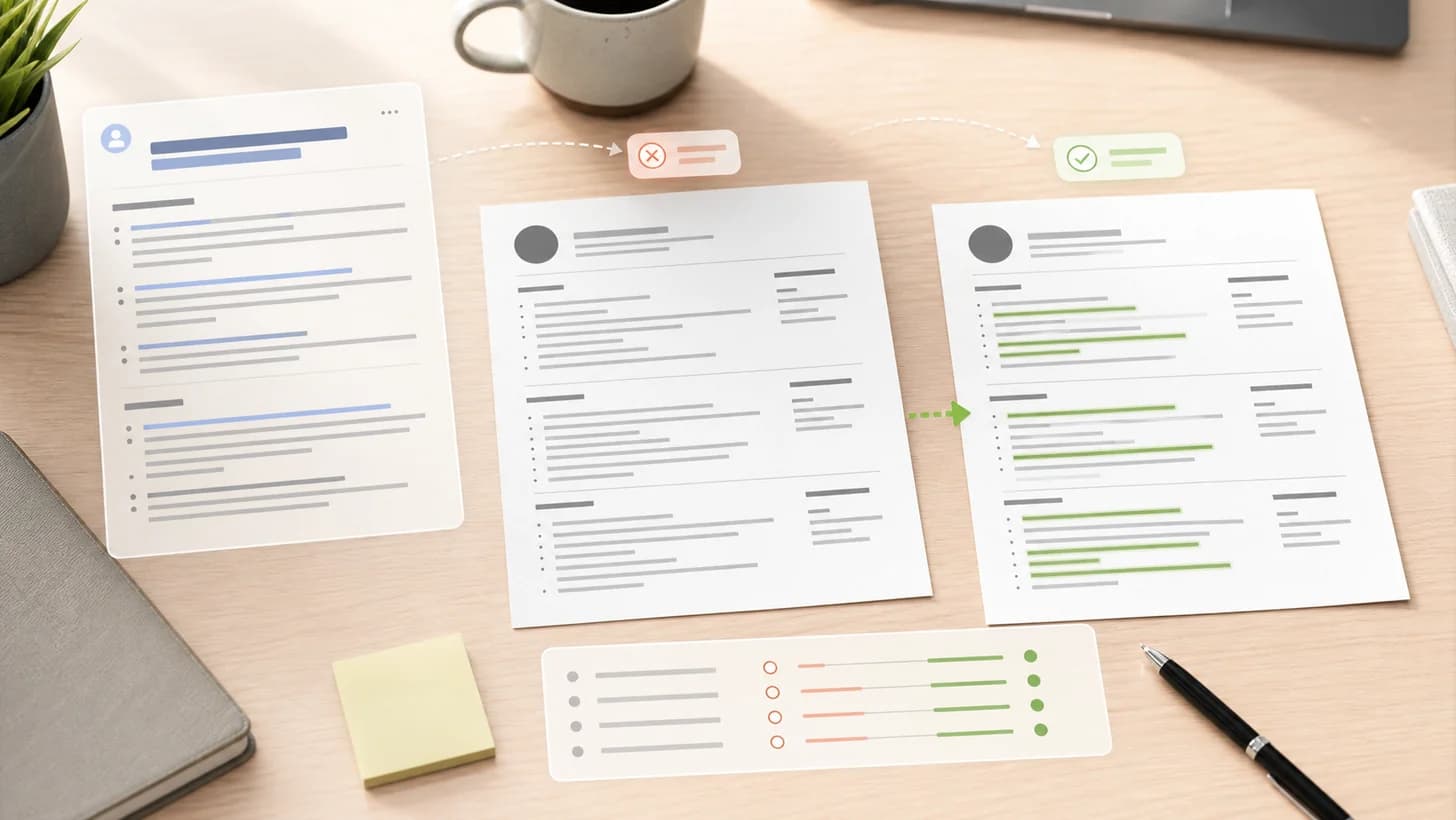
Why Resume Tailoring Matters for Job Applications
Learn why resume tailoring matters, what to change for each job, and how Minova helps you turn a broad resume into a focused application.
by Milad Bonakdar
Author

What Is a Career Profile? A Minova Guide for Job Seekers
Learn what a career profile is, how it differs from a resume, and what to add so Minova can help you tailor stronger resumes faster.
by Milad Bonakdar
Author

Career Interests Workbook: Find Job Ideas That Fit You
Use a free career interests workbook to identify the work you enjoy, connect it to your strengths and values, and turn your notes into job titles, resume keywords, and next steps.
by Mona Minaie
Author