Resume Job Match
See how well your resume matches the job description
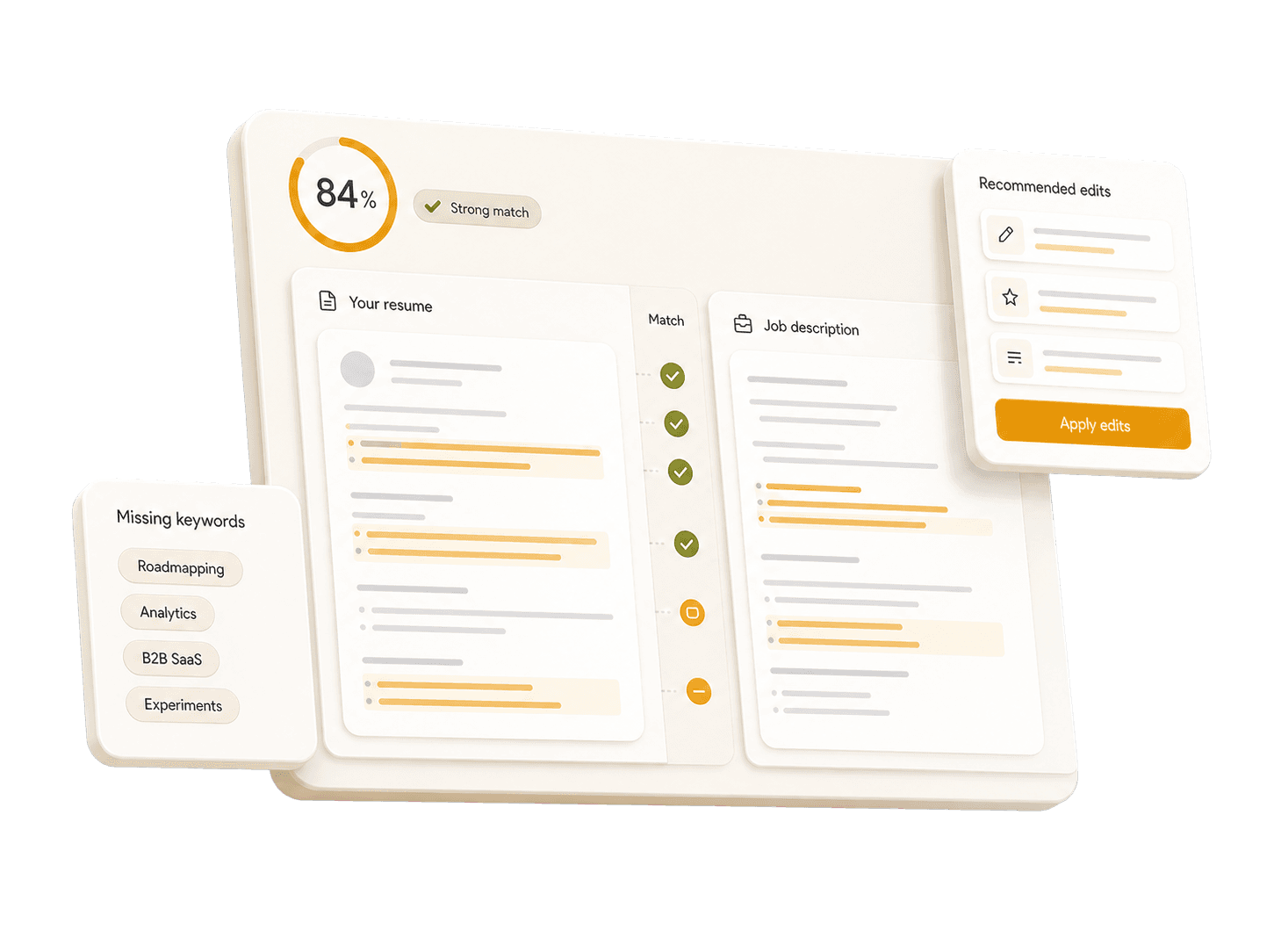
Get your match score, missing keywords, and the edits that matter.
- No Signup Required
- Private by Default
- Usually under 60 sec
Match inputs
Two steps to your match report
Add your resume and paste the job description to run a free match.
Keep improving
Tailor resumeCheck resume scorePractice interviewHow the match score is calculated
The score is not a language model’s opinion. It is computed from your resume and the job description you paste, with fixed weights — so the same two documents always produce the same number, and a change in the score means a change in your resume.
Resume structure
30%Starts at 100 and subtracts for what is missing or malformed. No work experience is the heaviest penalty by far, followed by missing contact details, no skills section, no professional summary, and bullet points that run too long or say too little.
Job description keyword coverage
70%How much of what the posting actually asks for appears in your resume. Each keyword is weighted by how central it is to the role, so missing one core requirement costs more than missing three incidental ones.
Where keyword coverage counts most
The same keyword is worth more in some parts of your resume than others, because recruiters read experience for evidence and skills for a checklist. Projects and certifications only add to the score when they contain keywords from the posting, so leaving them out never counts against you.
- 55%Work experience
- 35%Skills
- 10%Professional summary
- up to +5%Projects
- up to +5%Certifications
Exact matches, near matches, and misses
A keyword found word for word earns full credit. A close variant — a different word form, a small spelling difference, the same term inside a longer phrase — is scored as a partial match and earns credit in proportion to how close it is. Everything else is counted as missed and appears in your keyword gaps. For the skills section only the ten most important skill keywords from the posting are scored, so padding a skills list with everything you have ever touched will not raise the number.
The score, the keyword lists, and the section breakdown are all computed directly from your two documents. AI writes the suggested edits and the fit summary — it does not decide the number.
Job match or resume score — which one do you need?
Both tools read the same resume and answer different questions. The resume score grades your resume on its own terms: structure, wording, completeness, and whether an ATS can parse it at all. It needs nothing but the file.
This tool needs a specific posting, and it measures your resume against that posting. Use the resume score while you are rewriting your resume and want it strong in general. Use the job match when you have a job in front of you and want to know what to change before you apply.
Check your resume scoreFrequently asked questions
- What is a good resume match score?
- Above 80 means your resume already speaks the posting’s language and needs only small edits. Between 60 and 80 is a real candidate with visible gaps worth closing before applying. Below 60 usually means the resume was written for a different kind of role, and keyword edits alone will not close the distance.
- Does a higher match score guarantee an interview?
- No. The score measures how well your resume matches one job description. It cannot see your portfolio, your referrals, the other applicants, or how many people the company intends to hire. A high score removes the most common reason for an early rejection; it does not do the rest of the work.
- How do ATS systems read keywords from my resume?
- Most applicant tracking systems extract plain text from your file and search it for terms taken from the job requisition. They do not know that “built dashboards in Looker” answers a requirement for “BI tooling” unless the wording overlaps. That is why a strong candidate can score badly — the experience is there, just not in words the system can match.
- Why is my score low when I have the right experience?
- Usually because your wording differs from the posting, or because the relevant work sits in a section that carries less weight. Experience carries 55% of keyword coverage and skills 35%, so a requirement mentioned only in your summary counts for far less than the same requirement evidenced inside a role.
- Should I copy keywords straight from the job description?
- Copy the vocabulary, not the sentences. If the posting says “stakeholder management” and you have done it, use that phrase instead of your own wording. Do not claim skills you do not have — a keyword gets you past a filter, and the interview is exactly where that stops working.
- How long does a match take?
- Usually under a minute. The resume is parsed, the posting is analysed for its keywords and their importance, and the two are scored against each other before the suggested edits are written.
- Which file formats can I upload?
- PDF, DOCX, TXT, and images, up to 20MB per file. If you already have a resume saved in Minova you can pick it from your saved resumes instead of uploading anything.
- Is the resume job match free?
- Yes. Running a match and seeing your score, your matched and missing keywords, and the first edits costs nothing and needs no account. A free Minova account unlocks the full list of edits and keeps your reports.
Already optimizing your career? Sign in for full access
Popular articles
Grow your career
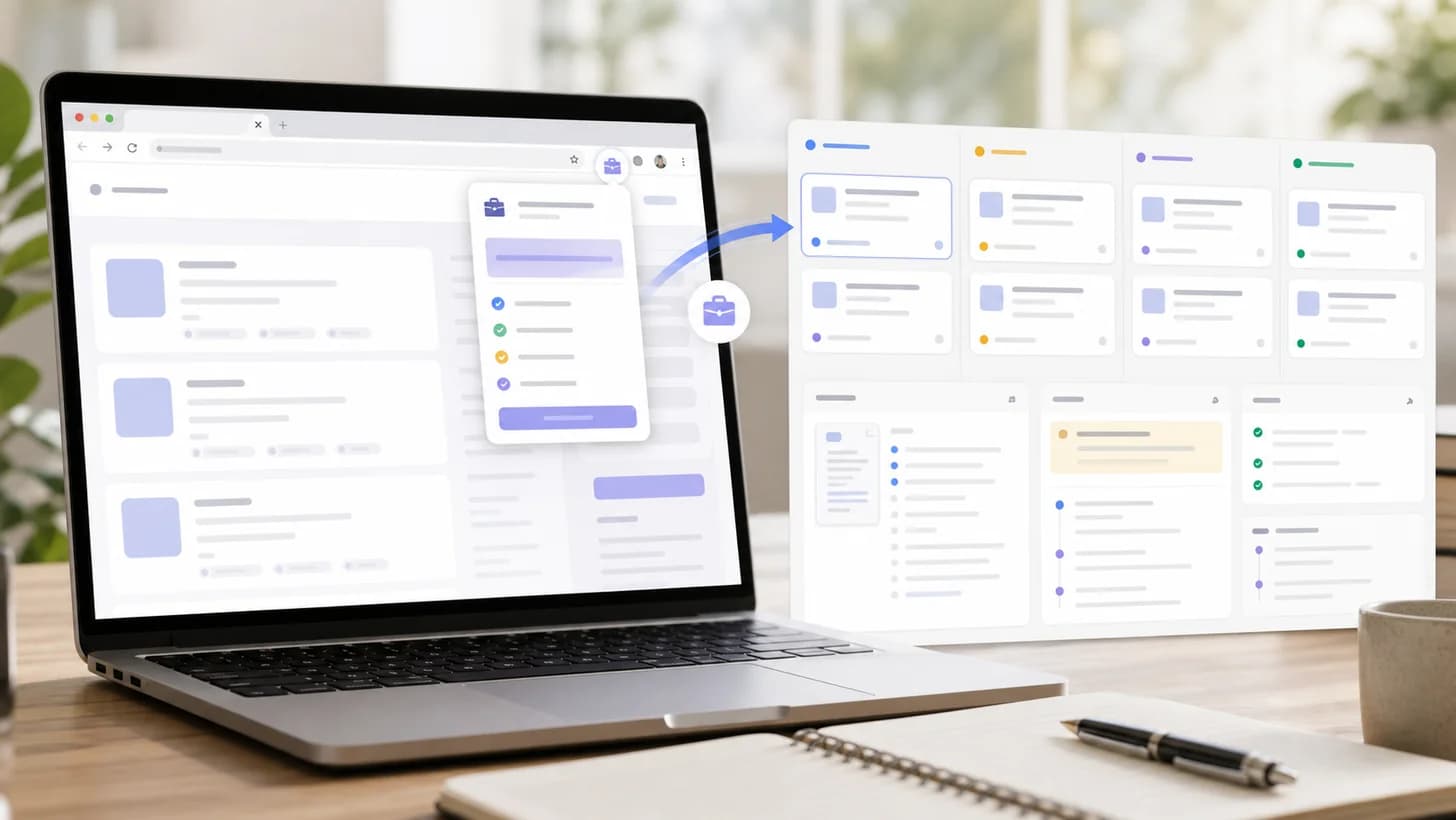
Job Tracker Extension Guide: Save Jobs and Tailor Resumes
Learn how Minova's job tracker extension saves role details, keeps applications organized, and turns job descriptions into resume-tailoring context.
by Milad Bonakdar
Author
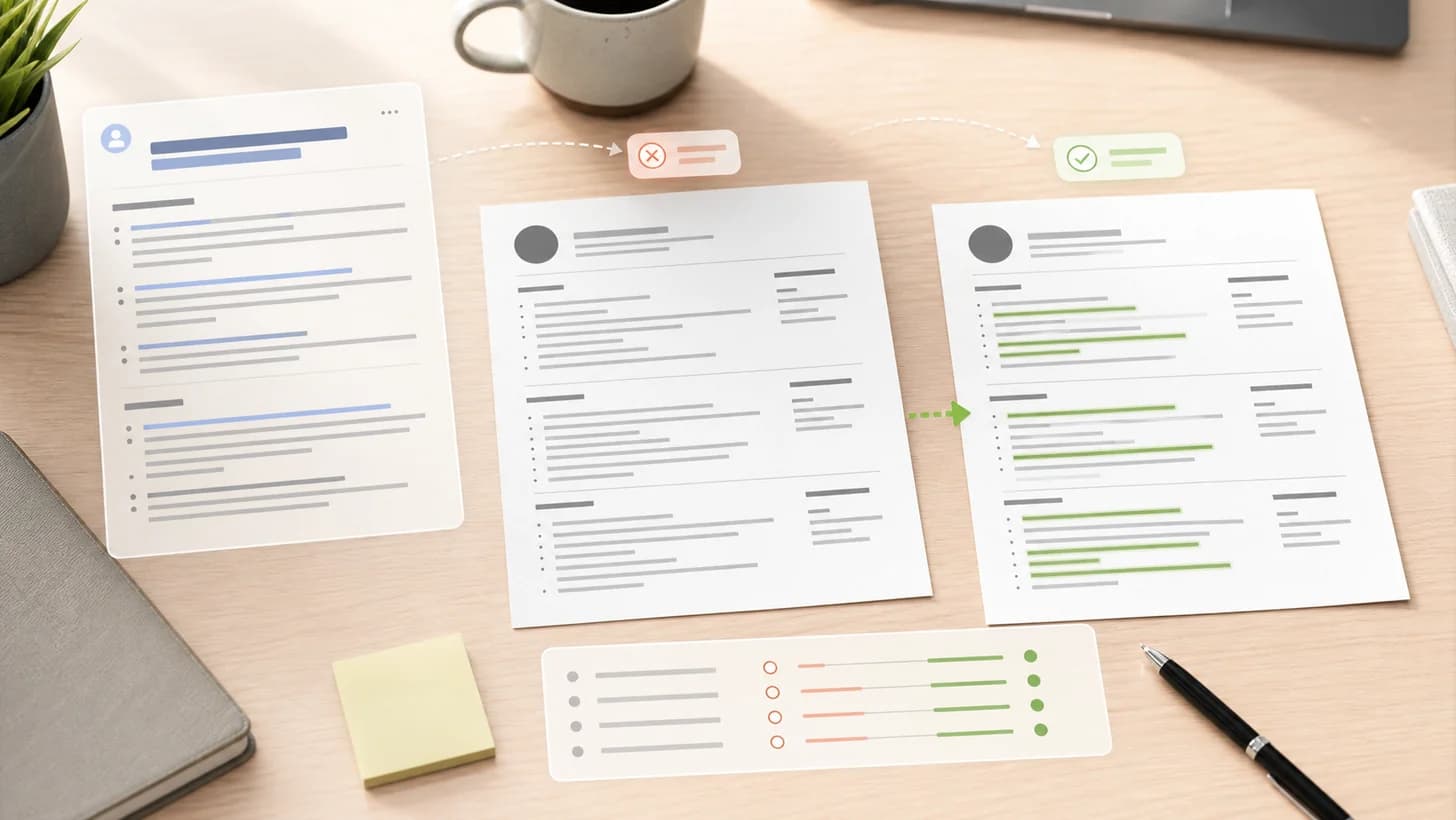
Why Resume Tailoring Matters for Job Applications
Learn why resume tailoring matters, what to change for each job, and how Minova helps you turn a broad resume into a focused application.
by Milad Bonakdar
Author

What Is a Career Profile? A Minova Guide for Job Seekers
Learn what a career profile is, how it differs from a resume, and what to add so Minova can help you tailor stronger resumes faster.
by Milad Bonakdar
Author

Career Interests Workbook: Find Job Ideas That Fit You
Use a free career interests workbook to identify the work you enjoy, connect it to your strengths and values, and turn your notes into job titles, resume keywords, and next steps.
by Mona Minaie
Author