
Use this template
Add your own experience and make this layout yours.
Resume Example
This resume format is highly effective for ATS (Applicant Tracking Systems) as it includes a professional summary that highlights the candidate's experience and skills in aviation engineering. The inclusion of relevant keywords such as 'composite materials', 'advanced aircraft design', and 'fuel efficiency' ensures high visibility in job searches. Additionally, the structured layout with clearly defined sections like Professional Summary, Work Experience, Education, and Skills helps ATS systems extract key information efficiently.
Instant Resume Score
Upload your resume for an instant ATS score and practical, role-specific improvements.
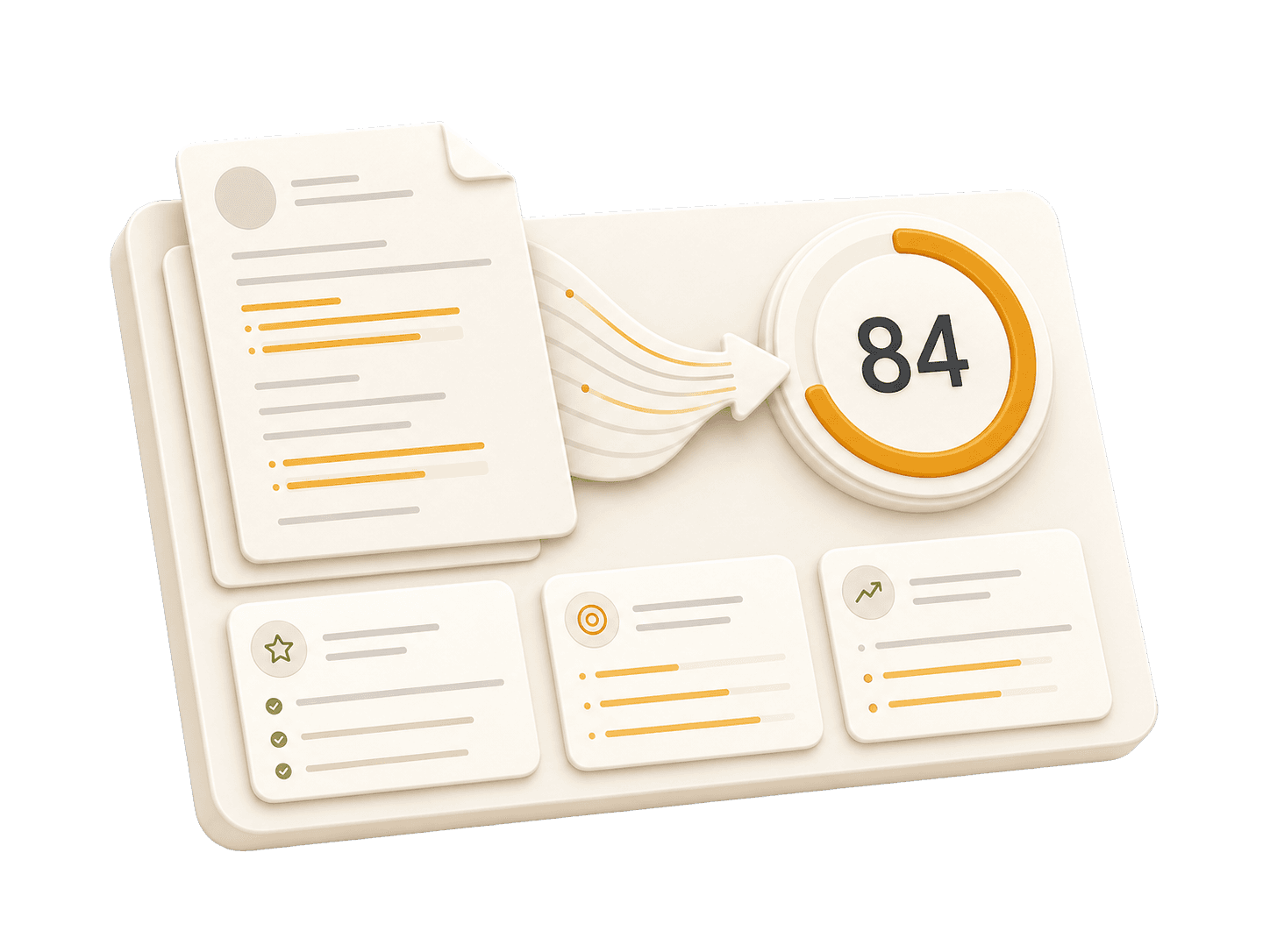
Add your resume to run a free score and get prioritized fixes.
Expert guidelines and best practices for each section of your resume.
01
First Name Last Name City, State, Zip Code Phone Number | Email Address LinkedIn Profile URL | Portfolio URL (Optional)
Your contact information is the first section recruiters see. Keep it concise and professional. Ensure your email address is appropriate (e.g., [email protected]). Include your LinkedIn profile for a comprehensive view of your professional journey. A portfolio or personal website is recommended for creative, technical, or design roles.
Do not include your full physical address (street number/name) for privacy reasons. Avoid including personal details like marital status, age, photo, or social security number unless specifically required in your country. Do not use unprofessional email addresses.
See clear examples of how to format contact details effectively.
Alex Johnson 1234 Elm St, Apt 56 Seattle, WA 98101 [email protected] github.com/aliciacode Single, 28 years old
Alex Johnson Seattle, WA (555) 987-6543 | [email protected] linkedin.com/in/alex-johnson | github.com/AlexJohnsonEngineer
02
Professional title + years of experience + core aviation skills + one quantified aircraft or materials result + target value.
Focus on aircraft structures, composite materials, stress analysis, CAD or FEA tools, testing methods, and any work tied to certification or manufacturing readiness.
Avoid generic objectives like 'Looking for a challenging role to grow my skills.' Recruiters want to know what value you bring to them, not what you want from them. Don't use first-person pronouns (I, me, my). Keep it concise and impactful.
Compare a weak objective with a strong professional summary.
Generic objective focused on wanting an aviation engineer role without evidence of relevant skills.
Aviation Engineer with 8+ years of experience in composite materials, aircraft structures, CAD modeling, finite element analysis, and validation testing. Led material and component improvements that reduced wing-structure weight by 20% and supported fuel-efficiency gains while maintaining structural requirements. Strong record of partnering with manufacturing, quality, and certification teams to turn analysis results into production-ready aircraft components.
03
Analysis: FEA, stress analysis, fatigue testing | Design: CAD, aircraft structures, composite laminates | Compliance: FAA documentation, maintenance standards
Group aviation skills by analysis, design, materials, testing, tools, and compliance so recruiters can scan the resume quickly.
Do not list skills you are not comfortable using in an interview. Avoid using progress bars or percentages to rate your skills (e.g., "Java: 80%"). Do not include outdated technologies unless specifically required.
Listed all programming languages known, including obscure ones like COBOL and FORTRAN
Focused on commonly used and relevant tools such as ANSYS, FEM simulation, and CAD design
Used percentages to describe proficiency in skills like "FEM Simulation: 90%"
Described proficiency through specific achievements or experiences
04
Job Title | Company Name | Location Month Year – Month Year - Action Verb + Context + Result (Quantified) - Led [Project] resulting in [Outcome]... - Collaborated with [Team] to implement [Feature]...
Use clear evidence such as weight reduction, cycle-time savings, test results, safety improvements, or the number of components, models, or analyses completed.
Avoid passive language like "Responsible for..." or "Tasked with...." Don't list every single daily task; focus on significant contributions and measurable outcomes. Avoid jargon that recruiters outside your field won't understand.
Practical example showing do's and don'ts for experiences
Responsible for aircraft materials and testing.
Designed and tested composite wing-structure materials, reducing component weight by 20% while preserving required load performance.
Worked with engineers on landing gear.
Led 5 engineers through landing-gear component reviews, prototype testing, and design updates for improved crashworthiness.
05
Degree Name | University Name | Location Month Year – Month Year - Relevant Coursework: [Course 1], [Course 2] - Honors/Awards: [Award Name] - GPA: X.X (if above 3.5)
List your highest degree first. If you have significant work experience, keep the education section brief. Include your GPA only if it is above 3.5 or if you are a recent graduate. Highlight relevant coursework, academic projects, honors, or leadership roles.
Do not include high school details if you have a college degree. Avoid listing every single course you took; select only the most relevant ones. Don't include graduation dates from decades ago if age discrimination is a concern in your field.
Practical example showing do's and don'ts for educations
Master of Science in Aerospace Engineering | University of Washington, Seattle, WA September 2013 - May 2017 - Coursework: Aerodynamics, Aircraft Structures, Thermodynamics, Heat Transfer, Control Systems, Electrical Circuits, Materials Science, Computer Science, Software Development, Data Analysis
Master of Science in Aerospace Engineering | University of Washington, Seattle, WA September 2013 - May 2017 - Relevant Coursework: Advanced Composite Materials, Aircraft Structural Design, Stress Analysis and Fatigue
06
Project Name | Technologies Used - Briefly describe what you built and its purpose - Highlight a specific technical challenge you solved - Link to GitHub or live demo if available
Choose aviation projects that show the engineering problem, toolset, analysis method, and practical outcome.
Don't include trivial tutorials unless you significantly expanded on them. Avoid projects that are outdated, incomplete, or irrelevant to the role you're applying for. Don't just list technologies—explain what you built and why it matters.
Practical example showing do's and don'ts for projects
Listed a generic tutorial or model without explaining the aircraft problem or analysis method.
Modeled a lightweight fuselage concept using composite laminate assumptions, CAD geometry, and finite element checks to compare weight, stiffness, and maintainability tradeoffs.
Common questions about this role and how to best present it on your resume.
Focus on aircraft structures, composite materials, stress analysis, CAD or FEA tools, testing methods, and any work tied to certification or manufacturing readiness.
Use clear evidence such as weight reduction, cycle-time savings, test results, safety improvements, or the number of components, models, or analyses completed.
Yes. Mention compliance documentation, test evidence, design reviews, maintenance standards, or certification support when those responsibilities are accurate.
Use internships, lab projects, senior design work, research, simulations, CAD models, material testing, and coursework that shows aerospace engineering judgment.
Transform your resume into an interview magnet with AI-powered optimization trusted by job seekers worldwide.
The average job seeker spends 3+ hours formatting a resume. Our AI does it in under 15 minutes, getting you to the application phase 12x faster.