
Use this template
Add your own experience and make this layout yours.
Resume Example
This resume format works exceptionally well for ATS optimization due to its structured and keyword-rich content that aligns with the job context of an Azure Data Engineer. By focusing on technical skills, certifications, projects, and achievements related to Microsoft Azure technologies such as Blob Storage, Databricks, and Data Factory, this template ensures high relevance when parsed by Applicant Tracking Systems (ATS). Bold, data-driven keywords help in catching attention while maintaining readability for human recruiters.
Instant Resume Score
Upload your resume for an instant ATS score and practical, role-specific improvements.
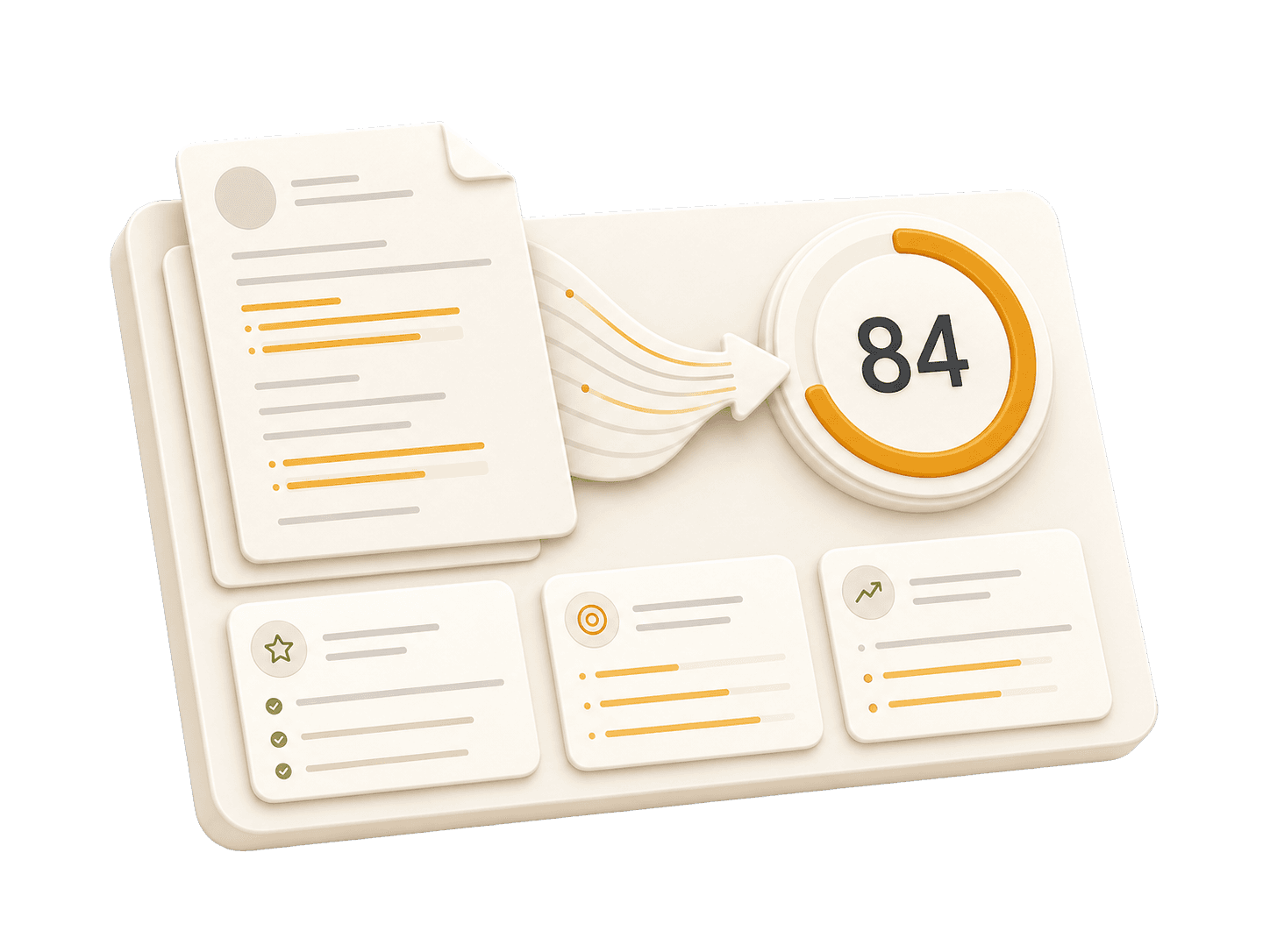
Add your resume to run a free score and get prioritized fixes.
Expert guidelines and best practices for each section of your resume.
01
First Name Last Name City, State, Zip Code Phone Number | Email Address LinkedIn Profile URL | Portfolio URL (Optional)
Your contact information is the first section recruiters see. Keep it concise and professional. Ensure your email address is appropriate (e.g., [email protected]). Include your LinkedIn profile for a comprehensive view of your professional journey. A portfolio or personal website is recommended for creative, technical, or design roles.
Do not include your full physical address (street number/name) for privacy reasons. Avoid including personal details like marital status, age, photo, or social security number unless specifically required in your country. Don't use unprofessional email addresses.
See clear examples of how to format contact details effectively.
Michael Nguyen 1234 Elm St, Apt 5678 Seattle, WA 98101 [email protected] github.com/DevMichaelNguyen Single, 35 years old
Michael Nguyen Seattle, WA (503) 456-7890 | [email protected] linkedin.com/in/michael-nguyen-aed | github.com/DevMichaelNguyen | michaelnguyen.dev
02
Professional Title Result-oriented [Role Name] with [Number] years of experience in [Key Skills/Industries]. Proven track record of [Major Achievement]. Skilled in [Key Technologies/Skills]. Committed to delivering [Specific Value] for [Target Industry/Company type].
A professional summary is your elevator pitch. It should be 3-5 sentences long, summarizing your experience, key skills, and major achievements. Tailor it to the job description by using relevant keywords. Focus on what makes you unique and the value you bring to potential employers.
Avoid generic objectives like 'Looking for a challenging role to grow my skills.' Recruiters want to know what value you bring to them, not what you want from them. Don't use first-person pronouns (I, me, my). Keep it concise and impactful.
Compare a weak objective with a strong professional summary.
Objective: I am a hard-working person looking for an Azure Data Engineer position where I can learn and grow.
Senior Azure Data Engineer with 6 years of experience building Azure Data Factory, Databricks, Synapse Analytics, and Data Lake Storage solutions. Improved reporting reliability by redesigning ingestion, validation, and monitoring for finance and product datasets.
03
Technical Skills - Languages: [List] - Frameworks: [List] - Tools: [List] Soft Skills - [Skill 1], [Skill 2], [Skill 3]
Group your skills logically (e.g., Languages, Frameworks, Tools). Focus on hard skills relevant to the job. List skills in order of proficiency or relevance. Soft skills are better demonstrated through bullet points in your experience section rather than a bare list.
Do not list skills you are not comfortable using in an interview. Avoid using progress bars or percentages to rate your skills (e.g., "Java: 80%"). Do not include outdated technologies unless specifically required.
Practical example showing do's and don'ts for skills
Java, Python, SQL: 75%, 90%, 80%
Python, Java, SQL
Microsoft Azure, Hadoop, Big Data, AI
Azure Data Factory, Azure Databricks, Synapse Analytics, Azure Data Lake Storage Gen2, Delta Lake
04
Job Title | Company Name | Location Month Year – Month Year - Action Verb + Context + Result (Quantified) - Led [Project] resulting in [Outcome]... - Collaborated with [Team] to implement [Feature]...
This is the core of your resume. Use reverse-chronological order (most recent first). Start each bullet with a strong action verb. Focus on achievements and impact, not just duties. Use numbers to quantify your impact (dollars, percentages, time saved, users affected). Show progression and increasing responsibility.
Avoid passive language like "Responsible for..." or "Tasked with...." Don't list every single daily task; focus on significant contributions and measurable outcomes. Avoid jargon that recruiters outside your field won't understand.
Practical example showing do's and don'ts for experiences
Managed data migration tasks from local servers to Azure Storage.
Migrated multi-terabyte SQL Server feeds to Azure Data Lake Storage Gen2 with Data Factory orchestration, reducing manual reconciliation and improving daily reporting reliability.
Worked with Databricks for data transformation tasks.
Built PySpark transformation jobs in Databricks for curated Delta tables, adding schema checks and alerting before data reached Power BI dashboards.
Created dashboards in Power BI to visualize data.
Tuned Synapse SQL tables and partitions for recurring executive dashboards, cutting refresh and query times during month-end reporting.
05
Degree Name | University Name | Location Month Year – Month Year - Relevant Coursework: [Course 1], [Course 2] - Honors/Awards: [Award Name] - GPA: X.X (if above 3.5)
List your highest degree first. If you have significant work experience, keep the education section brief. Include your GPA only if it is above 3.5 or if you are a recent graduate. Highlight relevant coursework, academic projects, honors, or leadership roles.
Do not include high school details if you have a college degree. Avoid listing every single course you took; select only the most relevant ones. Don't include graduation dates from decades ago if age discrimination is a concern in your field.
Practical example showing do's and don'ts for educations
Master of Science in Computer Engineering | Tech University | Seattle, WA September 2017 – May 2020 - Coursework: Python Programming, Data Structures, Introduction to Machine Learning, Database Systems - GPA: 3.8
Master of Science in Computer Engineering | Tech University | Seattle, WA September 2017 – May 2020 - Relevant Coursework: Advanced Machine Learning with Azure, Distributed Systems, Cloud Computing Architecture - Honors/Awards: Dean’s List
06
Project Name | Technologies Used - Briefly describe what you built and its purpose - Highlight a specific technical challenge you solved - Link to GitHub or live demo if available
Projects are excellent for demonstrating practical skills, especially if you lack work experience or are changing careers. Include a link to the GitHub repo or live demo if possible. Focus on projects that show problem-solving skills and relevant technologies for the target role.
Don't include trivial tutorials unless you significantly expanded on them. Avoid projects that are outdated, incomplete, or irrelevant to the role you're applying for. Don't just list technologies—explain what you built and why it matters.
Practical example showing do's and don'ts for projects
Built a simple Azure pipeline. Used several cloud tools and made reports faster.
Built a lakehouse prototype with Azure Data Factory, Databricks, Delta Lake, and Power BI, documenting ingestion logic, validation checks, and downstream reporting use cases.
Common questions about this role and how to best present it on your resume.
Emphasize Azure Data Factory, Databricks, Synapse Analytics, Azure Data Lake Storage, SQL, Python or PySpark, data modeling, orchestration, monitoring, and examples of reliable production pipelines.
Start with the platform or pipeline you improved, explain the data problem, and include a realistic result such as faster refreshes, fewer manual fixes, cleaner reporting, or better governance.
Yes, include projects when they show hands-on Azure work, especially lakehouse design, ETL orchestration, streaming ingestion, Power BI datasets, or documented data-quality checks.
Microsoft Azure Data Fundamentals and Azure Data Engineer Associate are relevant when current. List them with honest dates and pair them with practical project or work examples.
In minutes, create a tailored, ATS-friendly resume proven to land 6X more interviews.
The average job seeker spends 3+ hours formatting a resume. Our AI does it in under 15 minutes, getting you to the application phase 12x faster.