
Use this template
Add your own experience and make this layout yours.
Resume Example
Marissa Chen
Chief Accountant | Accounting Operations & Compliance
[email protected] | +1 (503) 987-6543 | linkedin.com/in/jonathan-wheeler | jwheeler-finance.com | San Francisco, CA
Professional Summary
Chief Accountant with 8 years of experience leading accounting operations, financial reporting, month-end close, and regulatory compliance for growing companies. Known for tightening controls, improving reconciliation workflows, and partnering with finance leaders on audit-ready reporting. Skilled in ERP process improvement, team supervision, variance analysis, and practical risk management.
Work Experience
Chief Accountant
01/2022
Global Finance Solutions Inc.
San Francisco, CA
•
Built monthly reporting models that helped leadership compare budget, cash flow, and department-level spend before approving major investments.
•
Implemented an automated reconciliation workflow that reduced recurring close errors by 65% and saved more than 35 hours of manual review each month.
•
Led audit preparation across revenue, payroll, and expense accounts, resolving $500,000 in documentation gaps before external fieldwork began.
•
Created compliance training and review checklists for accounting staff, reducing repeat policy exceptions by 40% during the first year.
Chief Accountant
12/2019 - 06/2020
Corporate Finance Group Inc.
San Francisco, CA
•
Streamlined invoice intake and approval routing, cutting average payment cycle time from 4 weeks to 6 business days.
•
Renegotiated payment schedules and vendor terms with procurement, improving working-capital timing and saving $350,000 in annual costs.
Head of Accounting
01/2018 - 11/2019
Finance Solutions Co.
San Francisco, CA
•
Rebuilt expense coding controls and approval thresholds, preventing $250,000 in out-of-policy spending from recurring.
•
Developed a practical risk register for close, tax, and treasury processes, giving finance leaders visibility into exposures above $5 million.
Skills
Financial Planning, Budgeting and Forecasting, Data Analytics for Decision Making, Risk Management, SAP, Oracle EBS, Blockchain Platforms, GDPR Compliance
Education
Master of Science in Accounting
09/2015 - 06/2018
Stanford University
Palo Alto, CA
Projects
Sustainable Finance Tracker
Built a finance tracker for ESG-related expenses and supporting documentation so accounting teams could prepare consistent management reports.
Blockchain Audit Tool Prototype
Created an internal audit prototype that mapped transaction approvals, attachments, and review status to improve evidence collection.
Certifications
Certified in Financial Risk Management (FRM)
06/2024
Certified Sustainability Professional (CSP)
10/2025
This Chief Accountant resume example is designed to be highly effective in passing through Applicant Tracking Systems (ATS). The format includes key sections such as Summary, Experience, Education, and Skills tailored specifically for financial roles, ensuring that all the necessary information is presented in an optimal way. Additionally, the use of action verbs and quantifiable achievements helps make a strong impression on hiring managers.
Instant Resume Score
Upload your resume for an instant ATS score and practical, role-specific improvements.
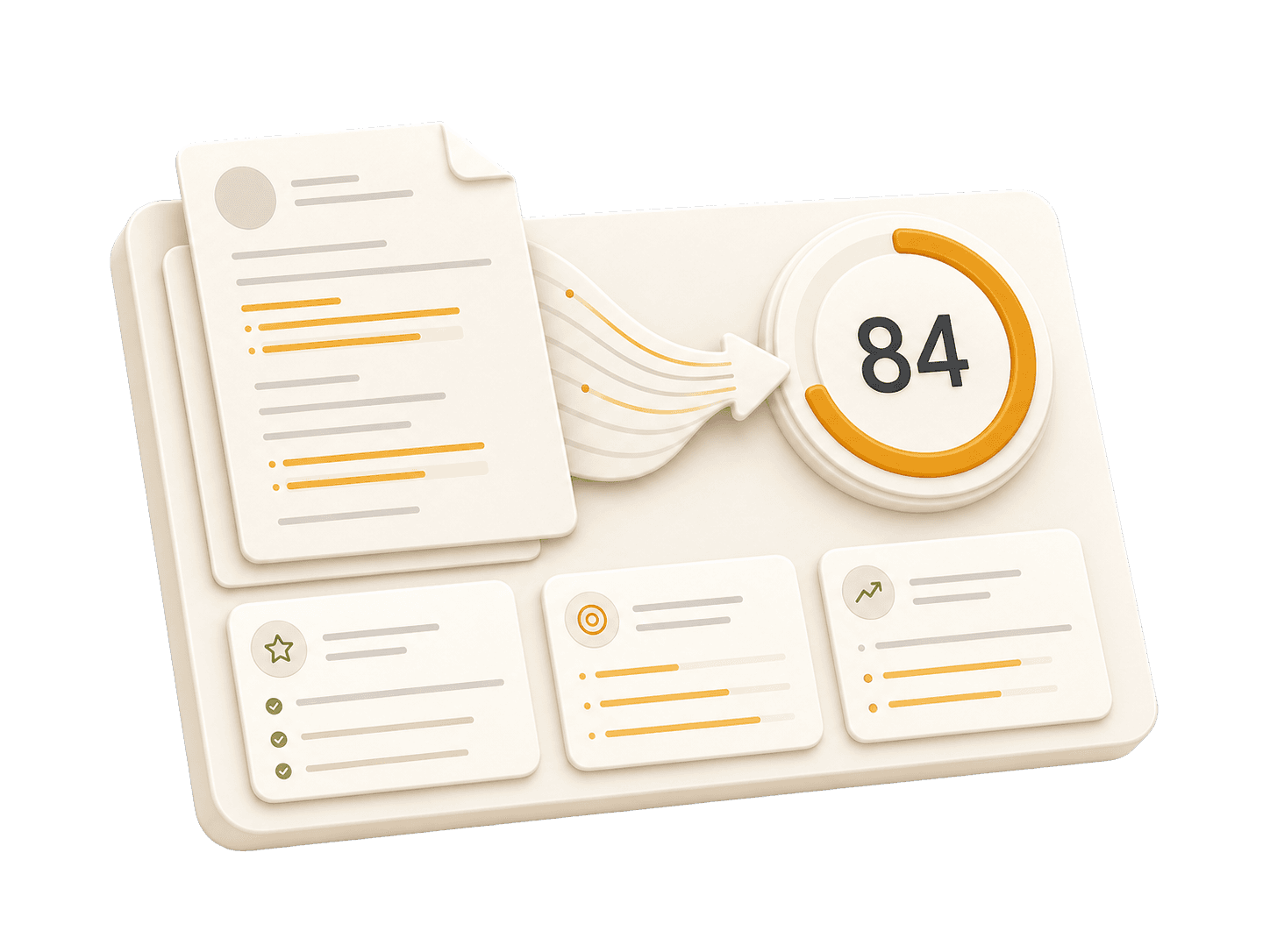
Add your resume to run a free score and get prioritized fixes.
Expert guidelines and best practices for each section of your resume.
01
First Name Last Name City, State, Zip Code Phone Number | Email Address LinkedIn Profile URL | Portfolio URL (Optional)
Your contact information is the first section recruiters see. Keep it concise and professional. Ensure your email address is appropriate (e.g., [email protected]). Include your LinkedIn profile for a comprehensive view of your professional journey. A portfolio or personal website is recommended for creative, technical, or design roles.
Do not include your full physical address (street number/name) for privacy reasons. Avoid including personal details like marital status, age, photo, or social security number unless specifically required in your country. Do not use unprofessional email addresses.
See clear examples of how to format contact details effectively.
Jonathan Wheeler 123 Main St, Apt 456 San Francisco, CA 94105 [email protected] github.com/nowhere
Jonathan Wheeler San Francisco, CA +1 (503) 987-6543 | [email protected] linkedin.com/in/jonathan-wheeler
02
Professional Title + accounting scope + years of experience + strongest close/reporting/control achievements + tools or leadership strengths relevant to the target role.
Use the summary to position the candidate as a finance leader who improves accuracy, controls, reporting quality, and close discipline. Keep it specific to the accounting leadership role and avoid generic career objectives.
Avoid generic objectives like 'Looking for a challenging role to grow my skills.' Recruiters want to know what value you bring to them, not what you want from them. Don't use first-person pronouns (I, me, my). Keep it concise and impactful.
Compare a weak objective with a strong professional summary.
Objective: I am a hardworking accounting professional looking for a Chief Accountant role where I can continue growing.
Chief Accountant with 8 years of experience leading accounting operations, financial reporting, month-end close, and regulatory compliance for growing companies. Known for tightening controls, improving reconciliation workflows, and partnering with finance leaders on audit-ready reporting. Skilled in ERP process improvement, team supervision, variance analysis, and practical risk management.
03
Accounting Systems - [ERP], [Close tool], [Reporting tool] Accounting Leadership - Month-end close, reconciliations, audit readiness, internal controls, tax coordination Analysis - Variance analysis, cash flow reporting, budget support
Make the skills section easy to scan and specific to accounting leadership. Focus on systems, close, reporting, compliance, audit, controls, and analysis instead of generic soft skills.
Do not list skills you are not comfortable using in an interview. Avoid using progress bars or percentages to rate your skills (e.g., "Java: 80%"). Do not include outdated technologies unless specifically required.
Practical example showing do's and don'ts for skills
Blockchain Platforms (learning)
SAP, Oracle EBS, Tableau
Leadership skills - strong team manager
Risk Management, Sustainability Reporting Standards, Financial Planning & Analysis
04
Job Title | Company Name | Location Month Year – Month Year - Action Verb + Context + Result (Quantified) - Led [Project] resulting in [Outcome]... - Collaborated with [Team] to implement [Feature]...
Use reverse-chronological experience bullets to prove accounting leadership. Strong bullets show the process owned, the problem solved, and the measurable impact on close speed, accuracy, audit readiness, compliance, or cash visibility.
Avoid passive language like 'Responsible for...' or 'Tasked with...'. Don't list every single daily task; focus on significant contributions and measurable outcomes. Avoid jargon that recruiters outside your field won't understand.
Practical example showing do's and don'ts for experiences
Responsible for maintaining accounting records, preparing reports, and supporting audits.
Implemented an automated reconciliation workflow that reduced recurring close errors by 65% and saved more than 35 hours of manual review each month.
05
Degree Name | University Name | Location Month Year – Month Year - Relevant Coursework: [Course 1], [Course 2] - Honors/Awards: [Award Name] - GPA: X.X (if above 3.5)
List your highest degree first. If you have significant work experience, keep the education section brief. Include your GPA only if it is above 3.5 or if you are a recent graduate. Highlight relevant coursework, academic projects, honors, or leadership roles.
Do not include high school details if you have a college degree. Avoid listing every single course you took; select only the most relevant ones. Don't include graduation dates from decades ago if age discrimination is a concern in your field.
Practical example showing do's and don'ts for educations
Bachelor of Arts | University of California, Los Angeles | Los Angeles, CA September 2008 – May 2012 - Coursework: Introduction to Accounting, Intermediate Algebra, Global Politics & Society
Master of Science in Finance | Stanford University | Palo Alto, CA September 2015 – June 2018 - Relevant Coursework: Financial Reporting and Analysis, Corporate Taxation, International Finance - Honors/Awards: Dean’s List - GPA: 3.9
06
Project Name | Tools/Technologies Used - Briefly describe what you created and its purpose - Highlight specific challenges you solved - Link to portfolio or demo if available
Projects are excellent for demonstrating practical skills, especially if you lack work experience or are changing careers. Include a link to your portfolio or demo if possible. Focus on projects that show problem-solving skills and relevant tools for the target role.
Don't include trivial tutorials unless you significantly expanded on them. Avoid projects that are outdated, incomplete, or irrelevant to the role you're applying for. Don't just list technologies—explain what you created and why it matters.
Practical example showing do's and don'ts for projects
Created a basic Excel spreadsheet for tracking expenses with no specific features or enhancements. No mention of how this improved efficiency.
Developed an automated expense tracking system using Python scripts that integrated with our ERP to streamline reporting and reduce manual errors by 40%.
Common questions about this role and how to best present it on your resume.
Emphasize accounting leadership, month-end close, financial reporting, audit readiness, controls, tax coordination, ERP tools, and examples of improving accuracy or efficiency.
Tie each bullet to a business result such as faster close cycles, fewer reconciliation errors, cleaner audits, better cash visibility, or stronger compliance controls.
Yes, include relevant credentials such as CPA, CMA, ACCA, or risk and accounting systems certifications when they are current and meaningful for the target role.
Briefly explain the gap when needed and use the resume to refocus attention on current accounting skills, recent training, consulting work, or measurable prior results.
Create a professional, optimized resume in minutes. No design skills needed—just proven results.
Recruiters scan resumes for an average of only 6 to 7 seconds. Our proven templates are designed to capture attention instantly and keep them reading.
