
Use this template
Add your own experience and make this layout yours.
Resume Example
Ethan Johnson
Cloud Solutions Architect
[email protected] | +1 (503) 456-7890 | linkedin.com/in/ethan-johnson-cloud | github.com/ejohnson24 | ejohnson.cloud | San Francisco, CA
Professional Summary
Cloud Solutions Architect specializing in AWS, Kubernetes, and infrastructure automation. Led the migration of a mid-sized e-commerce platform to an automated cloud environment, reducing operating costs by 30% and shortening release cycles from weeks to hours. Experienced with Terraform, CI/CD pipelines, AWS Lambda, and secure cloud architecture for production workloads.
Work Experience
Senior Cloud Engineer
01/2022
Tech Company Inc
San Francisco, CA
•
Led a 5-person engineering team to move a monolithic service into Kubernetes-based microservices, reducing deployment time by 60% while keeping rollback steps documented.
•
Built automated test and release pipelines for Terraform and containerized services, catching 95% of regressions before production deployment.
•
Mentored 3 junior engineers on cloud runbooks, incident reviews, and infrastructure as code standards, improving team ownership of production changes.
•
Tuned application caching and database query patterns for cloud-hosted APIs, reducing average response time from 500ms to 120ms.
Cloud Engineer
06/2020 - 12/2021
Cloud Solutions Ltd
San Francisco, CA
•
Developed CI/CD pipelines for AWS workloads that reduced deployment errors by 80% through reusable templates, validation checks, and staged approvals.
•
Created a disaster recovery plan with tested restore steps and monitoring alerts, supporting 99.9% uptime over a 12-month period.
Cloud Engineer Intern
08/2019 - 05/2020
Innovative Tech Corp
San Francisco, CA
•
Configured Kubernetes namespaces, ingress rules, and autoscaling policies for services handling up to 2M requests per day without reported downtime.
•
Automated environment setup with Terraform modules and deployment scripts, reducing provisioning time from days to hours.
Skills
JavaScript, Python, Node.js, React, AWS (S3, Lambda, RDS, VPC), Docker, Kubernetes, Terraform
Education
Bachelor of Science in Computer Science
09/2013 - 05/2017
University of Technology
San Francisco, CA
Projects
CloudyMicroServices
github.com/ejohnson24/cloudymicroservices
Developed a Kubernetes-based microservices architecture for an open-source application, using Docker, health checks, and rolling deployments to improve scalability and fault tolerance. Added CI/CD pipelines that automated build, test, and deployment steps for repeatable releases.
SecureCloudStorage
Built an AWS storage prototype focused on secure access patterns, using S3 bucket policies, IAM roles, lifecycle rules, and server-side encryption. Documented controls for audit readiness and least-privilege access without overstating formal compliance ownership.
Certifications
AWS Certified Solutions Architect - Associate
06/2023
Kubernetes Certified Administrator (CKA)
09/2024
This resume format is designed to be ATS-friendly by including relevant keywords such as AWS, Kubernetes, and DevOps which are crucial for the cloud engineering field. The layout emphasizes technical skills and projects with quantifiable achievements, making it easy for recruiters to see the candidate's value proposition at a glance. Additionally, the inclusion of links to LinkedIn, GitHub, and personal websites provides additional context that can be beneficial during ATS screening.
Instant Resume Score
Upload your resume for an instant ATS score and practical, role-specific improvements.
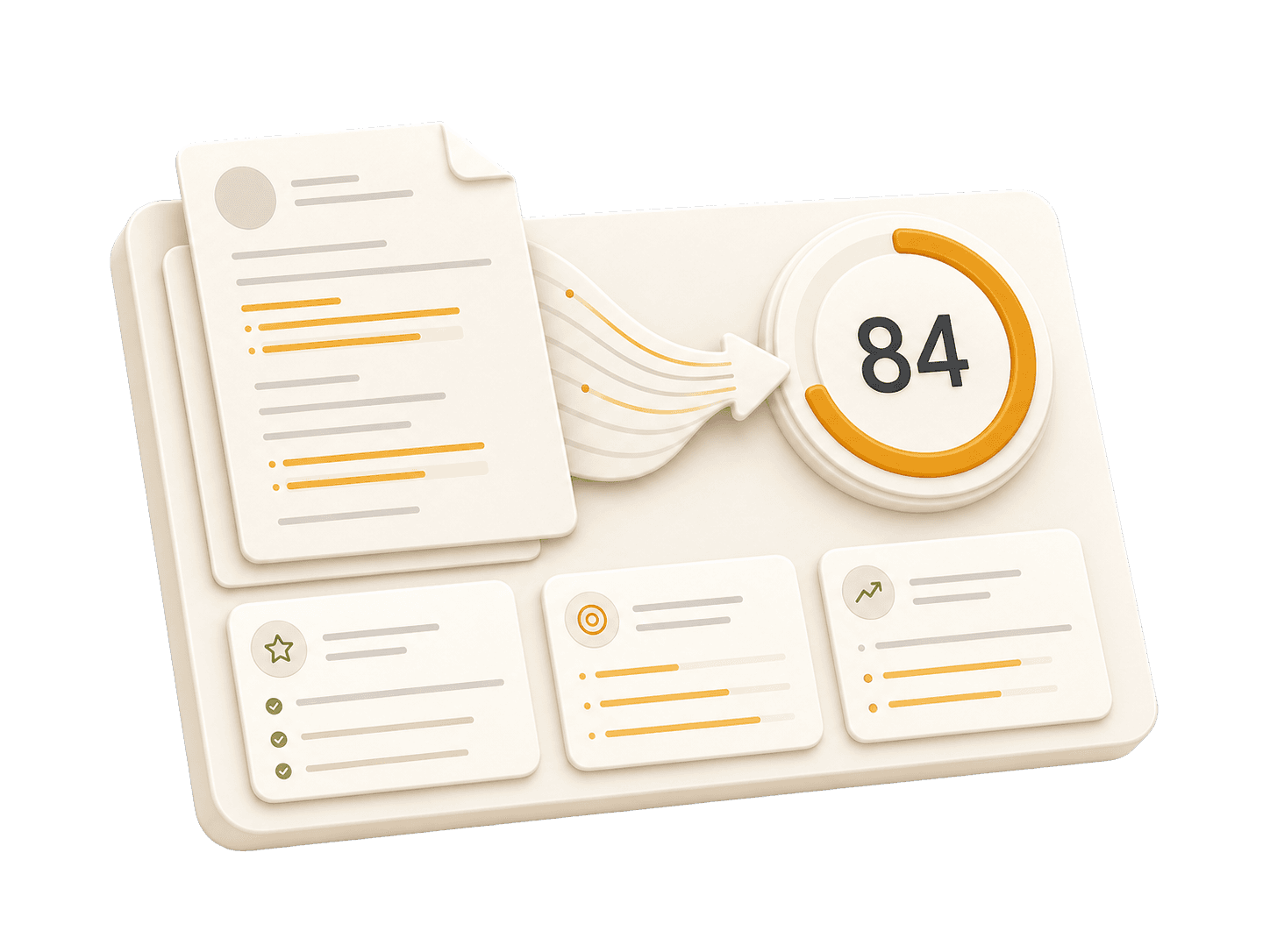
Add your resume to run a free score and get prioritized fixes.
Expert guidelines and best practices for each section of your resume.
01
First Name Last Name City, State, Zip Code Phone Number | Email Address LinkedIn Profile URL | Portfolio URL (Optional)
Your contact information is the first section recruiters see. Keep it concise and professional. Ensure your email address is appropriate (e.g., [email protected]). Include your LinkedIn profile for a comprehensive view of your professional journey. A portfolio or personal website is recommended for creative, technical, or design roles.
Do not include your full physical address (street number/name) for privacy reasons. Avoid including personal details like marital status, age, photo, or social security number unless specifically required in your country. Don't use unprofessional email addresses. Do NOT include GitHub links for artists - use ArtStation, Behance, or portfolio sites instead.
See clear examples of how to format contact details effectively.
John Doe 1234 Random St, Apt 56 New York, NY 10001 [email protected] github.com/aliciacode Single, 28 years old
Alicia Chen Los Angeles, CA (555) 123-4567 | [email protected] linkedin.com/in/aliciachen | artstation.com/aliciachen
02
Professional Title Result-oriented [Role Name] with [Number] years of experience in [Key Skills/Industries]. Proven track record of [Major Achievement]. Skilled in [Key Technologies/Skills]. Committed to delivering [Specific Value] for [Target Industry/Company type].
A professional summary is your elevator pitch. It should be 3-5 sentences long, summarizing your experience, key skills, and major achievements. Tailor it to the job description by using relevant keywords. Focus on what makes you unique and the value you bring to potential employers.
Avoid generic objectives like 'Looking for a challenging role to grow my skills.' Recruiters want to know what value you bring to them, not what you want from them. Don't use first-person pronouns (I, me, my). Keep it concise and impactful.
Compare a weak objective with a strong professional summary.
Objective: I am a hard-working individual looking for a Cloud Engineer position where I can learn new things and advance my career.
Senior Cloud Engineer with over 6 years of experience in designing scalable, secure cloud infrastructures. Led the migration of a mid-sized e-commerce platform to AWS VPCs, ensuring GDPR compliance while reducing operational costs by 30%. Skilled in Kubernetes orchestration, infrastructure as code (IaC) with Terraform, and serverless architectures using AWS Lambda.
03
Technical Skills - Languages: [List] - Frameworks: [List] - Tools: [List] Soft Skills - [Skill 1], [Skill 2], [Skill 3]
Group your skills logically (e.g., Languages, Frameworks, Tools). Focus on hard skills relevant to the job. List skills in order of proficiency or relevance. Soft skills are better demonstrated through bullet points in your experience section rather than a bare list.
Do not list skills you are not comfortable using in an interview. Avoid using progress bars or percentages to rate your skills (e.g., "Java: 80%"). Do not include outdated technologies unless specifically required.
Practical example showing do's and don'ts for skills
Java: Advanced, Python: Intermediate
Java, Python
04
Job Title | Company Name | Location Month Year – Month Year - Action Verb + Context + Result (Quantified) - Led [Project] resulting in [Outcome]... - Collaborated with [Team] to implement [Feature]...
This is the core of your resume. Use reverse-chronological order (most recent first). Start each bullet with a strong action verb. Focus on achievements and impact, not just duties. Use numbers to quantify your impact (dollars, percentages, time saved, users affected). Show progression and increasing responsibility.
Avoid passive language like 'Responsible for...' or 'Tasked with...'. Don't list every single daily task; focus on significant contributions and measurable outcomes. Avoid jargon that recruiters outside your field won't understand.
Practical example showing do's and don'ts for experiences
Managed cloud resources, ensuring proper allocation and utilization.
Optimized resource utilization in a multi-region AWS environment, resulting in a 35% reduction in cloud costs.
Assisted with the migration of systems to the cloud.
Led the migration of legacy systems from on-premises to AWS VPCs, ensuring compliance with GDPR and reducing deployment time by 40%.
05
Degree Name | University Name | Location Month Year – Month Year - Relevant Coursework: [Course 1], [Course 2] - Honors/Awards: [Award Name] - GPA: X.X (if above 3.5)
List your highest degree first. If you have significant work experience, keep the education section brief. Include your GPA only if it is above 3.5 or if you are a recent graduate. Highlight relevant coursework, academic projects, honors, or leadership roles.
Do not include high school details if you have a college degree. Avoid listing every single course you took; select only the most relevant ones. Don't include graduation dates from decades ago if age discrimination is a concern in your field.
Practical example showing do's and don'ts for educations
B.A. in Business Administration | San Francisco State University January 2015 – May 2019 - Courses: Introduction to Accounting, Principles of Marketing, Management Information Systems, Human Resource Management, Financial Reporting and Control
B.S. in Computer Science | University of Technology September 2013 – May 2017 - Relevant Coursework: Operating Systems, Distributed Systems, Cloud Computing - Honors/Awards: Dean’s List (Spring 2016) - GPA: 3.8
06
Project Name | Technologies Used - Briefly describe what you built and its purpose - Highlight a specific technical challenge you solved - Link to GitHub or live demo if available
Projects are excellent for demonstrating practical skills, especially if you lack work experience or are changing careers. Include a link to the GitHub repo or live demo if possible. Focus on projects that show problem-solving skills and relevant technologies for the target role.
Don't include trivial tutorials unless you significantly expanded on them. Avoid projects that are outdated, incomplete, or irrelevant to the role you're applying for. Don't just list technologies—explain what you built and why it matters.
Practical example showing do's and don'ts for projects
Created a basic Flask app with CRUD operations on an SQLite database. Used Bootstrap for styling.
Developed a scalable REST API using Flask, SQLAlchemy, and PostgreSQL to manage user profiles in a SaaS application. Implemented authentication with JWT tokens and used Docker for containerization. Link: https://github.com/ejohnson24/user-profile-api
Common questions about this role and how to best present it on your resume.
Strong cloud engineer resumes usually show a cloud platform such as AWS, Azure, or Google Cloud, plus infrastructure as code, containerization, CI/CD, monitoring, networking, and security basics.
Use the gap briefly and honestly, then point to relevant projects, certifications, contract work, or hands-on labs that show your cloud skills stayed current.
Cloud engineers design, automate, monitor, and improve cloud infrastructure. Strong bullets connect those responsibilities to uptime, deployment speed, security, cost control, or developer productivity.
Place current, relevant certifications in a dedicated certifications section and connect them to real project work where possible. Certifications support your resume, but they should not replace evidence of hands-on delivery.
Transform your resume into an interview magnet with AI-powered optimization trusted by job seekers worldwide.
Job seekers using professional, AI-enhanced resumes land roles in an average of 5 weeks compared to the standard 10. Stop waiting and start interviewing.
