
Use this template
Add your own experience and make this layout yours.
Resume Example
This resume format works exceptionally well with Applicant Tracking Systems (ATS) due to its structured and keyword-rich approach. The inclusion of specific job titles such as 'Data Strategy Director' ensures that ATS systems can easily recognize the candidate's qualifications and experience in data analytics roles. Additionally, by emphasizing achievements like the implementation of real-time data dashboards, this resume stands out for hiring managers looking for candidates who can drive operational efficiency and strategic insights within their organizations.
Instant Resume Score
Upload your resume for an instant ATS score and practical, role-specific improvements.
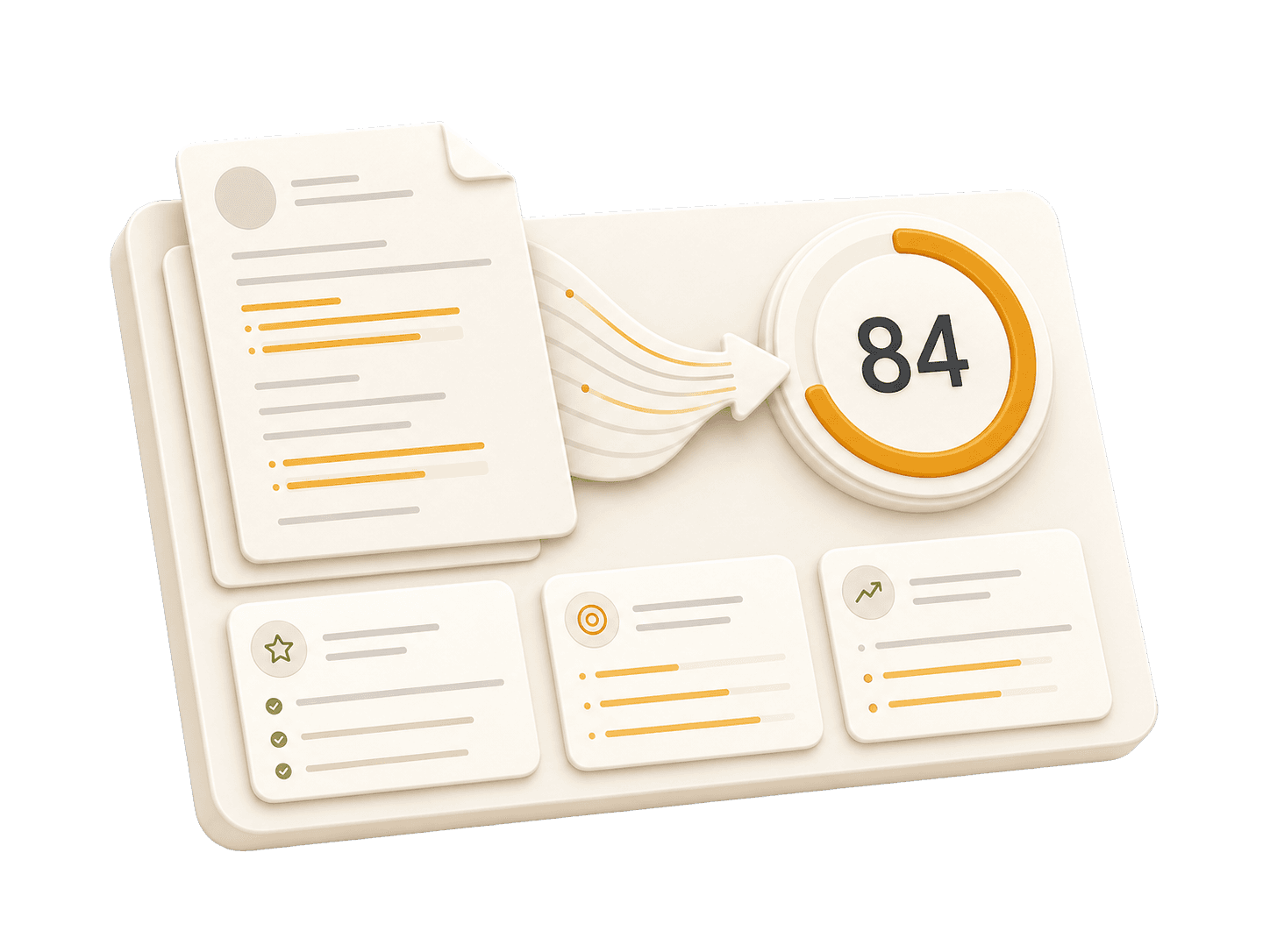
Add your resume to run a free score and get prioritized fixes.
Expert guidelines and best practices for each section of your resume.
01
First Name Last Name City, State, Zip Code Phone Number | Email Address LinkedIn Profile URL | Portfolio URL (Optional)
Your contact information is the first section recruiters see. Keep it concise and professional. Ensure your email address is appropriate (e.g., [email protected]). Include your LinkedIn profile for a comprehensive view of your professional journey. A portfolio or personal website is recommended for creative, technical, or design roles.
Do not include your full physical address (street number/name) for privacy reasons. Avoid including personal details like marital status, age, photo, or social security number unless specifically required in your country. Don't use unprofessional email addresses.
See clear examples of how to format contact details effectively.
John Doe 1234 Random St, Apt 56 New York, NY 10001 [email protected] github.com/aliciacode Single, 28 years old
John Doe New York, NY (555) 123-4567 | [email protected] linkedin.com/in/johndoe | github.com/johndoe | johndoe.dev
02
Professional Title Result-oriented [Role Name] with [Number] years of experience in [Key Skills/Industries]. Proven track record of [Major Achievement]. Skilled in [Key Technologies/Skills]. Committed to delivering [Specific Value] for [Target Industry/Company type].
A professional summary is your elevator pitch. It should be 3-5 sentences long, summarizing your experience, key skills, and major achievements. Tailor it to the job description by using relevant keywords. Focus on what makes you unique and the value you bring to potential employers.
Avoid generic objectives like 'Looking for a challenging role to grow my skills.' Recruiters want to know what value you bring to them, not what you want from them. Don't use first-person pronouns (I, me, my). Keep it concise and impactful.
Compare a weak objective with a strong professional summary.
Objective: I am a hard-working individual looking for a Data Manager position where I can learn new things and advance my career.
Data Manager with 6+ years of experience improving BI reporting, data quality, and analytics delivery. Reduced ETL refresh time from 24 hours to 30 minutes and improved forecast accuracy by 25% through SQL, Python, and Tableau workflows.
03
Technical Skills - Languages: [List] - Frameworks: [List] - Tools: [List] Soft Skills - [Skill 1], [Skill 2], [Skill 3]
Group your skills logically (e.g., Languages, Frameworks, Tools). Focus on hard skills relevant to the job. List skills in order of proficiency or relevance. Soft skills are better demonstrated through bullet points in your experience section rather than a bare list.
Do not list skills you are not comfortable using in an interview. Avoid using progress bars or percentages to rate your skills (e.g., "Java: 80%") as they are subjective and often misinterpreted. Don't include outdated technologies unless specifically required.
Practical example showing do's and don'ts for skills
Java: 75%, Python: 90%
Python, Java
Talend, SQL Server, IBM DataStage
ETL Tools: Talend, Informatica PowerCenter, AWS Glue
04
Job Title | Company Name | Location Month Year – Month Year - Action Verb + Context + Result (Quantified) - Led [Project] resulting in [Outcome]... - Collaborated with [Team] to implement [Feature]...
This is the core of your resume. Use reverse-chronological order (most recent first). Start each bullet with a strong action verb. Focus on achievements and impact, not just duties. Use numbers to quantify your impact (dollars, percentages, time saved, users affected). Show progression and increasing responsibility.
Avoid passive language like 'Responsible for...' or 'Tasked with...'. Don't list every single daily task; focus on significant contributions and measurable outcomes. Avoid jargon that recruiters outside your field won't understand.
Practical example showing do's and don'ts for experiences
Responsible for analyzing customer data and generating reports.
Analyzed customer behavior data to drive targeted marketing campaigns, increasing email open rates by 25%.
Worked on ETL processes to integrate multiple sources of data.
Redesigned SQL and Python ETL workflows, reducing daily analytics refresh time from 24 hours to 30 minutes and improving dashboard reliability for finance and sales teams.
05
Degree Name | University Name | Location Month Year – Month Year - Relevant Coursework: [Course 1], [Course 2] - Honors/Awards: [Award Name] - GPA: X.X (if above 3.5)
List your highest degree first. If you have significant work experience, keep the education section brief. Include your GPA only if it is above 3.5 or if you are a recent graduate. Highlight relevant coursework, academic projects, honors, or leadership roles.
Do not include high school details if you have a college degree. Avoid listing every single course you took; select only the most relevant ones. Don't include graduation dates from decades ago if age discrimination is a concern in your field.
Practical example showing do's and don'ts for educations
Master of Science in Information Technology | University College London | London, UK September 2015 – June 2018 - Coursework: Introduction to Programming, Database Systems, Data Structures - GPA: 3.2
Master of Science in Information Systems (Data Analytics) | San Francisco State University | San Francisco, CA September 2016 – May 2018 - Relevant Coursework: Data Warehousing and Mining, Advanced SQL for Business Intelligence, Predictive Modeling with Python
06
Project Name | Tools/Technologies Used - Briefly describe what you created and its purpose - Highlight specific challenges you solved - Link to portfolio or demo if available
Projects are excellent for demonstrating practical skills, especially if you lack work experience or are changing careers. Include a link to your portfolio or demo if possible. Focus on projects that show problem-solving skills and relevant tools for the target role.
Don't include trivial tutorials unless you significantly expanded on them. Avoid projects that are outdated, incomplete, or irrelevant to the role you're applying for. Don't just list technologies—explain what you created and why it matters.
Practical example showing do's and don'ts for projects
Created a basic Python script that prints 'Hello, World'. No specific challenges or tools used.
Built a Python and SQL data quality validation tool that reduced manual checks by 80% and standardized validation rules for monthly reporting pipelines.
Common questions about this role and how to best present it on your resume.
Focus on data quality, governance, stakeholder reporting, BI tools, pipeline reliability, and measurable business outcomes. Show how your work helped teams make faster or more accurate decisions.
Start with the system, process, or team you improved, then add the tools you used and the result. Metrics such as refresh time, reporting accuracy, adoption, or cost avoidance work well when they are truthful.
Yes. Include relevant databases, SQL, Python or R, ETL tools, cloud platforms, and visualization tools. Keep the list focused on tools you can discuss confidently in an interview.
Show how you guided analysts, set standards, partnered with business teams, or improved decision-making. Leadership can appear through projects, governance work, mentoring, or cross-functional delivery.
Create a professional, optimized resume in minutes. No design skills needed—just proven results.
3 out of 4 resumes never reach a human eye. Our keyword optimization increases your pass rate by up to 80%, ensuring recruiters actually see your potential.