
Use this template
Add your own experience and make this layout yours.
Resume Example
Avery Cole
Director of Data Science | Machine Learning Strategy & Team Leadership
[email protected] | +1 (408) 555-0123 | linkedin.com/in/emily-brown | emilybrown.io | San Francisco, CA
Professional Summary
Director of Data Science with 8+ years of experience leading machine learning, analytics, and data platform teams. Guides cross-functional teams from model discovery through production, with recent work improving recommendation relevance, customer segmentation, and decision automation. Strong background in Python, TensorFlow, AWS SageMaker, data governance, and stakeholder communication for executive audiences.
Work Experience
Director of Data Science
01/2022
Tech Company Inc
San Francisco, CA
•
Directed a team of data scientists and machine learning engineers building predictive models for pricing, retention, and demand forecasting, contributing to a 25% revenue lift in targeted product lines.
•
Established a practical data governance framework with privacy reviews, access controls, and model documentation, reducing high-priority data quality and compliance incidents by 80%.
•
Standardized feature stores, experiment tracking, and reusable training pipelines, cutting average model training and deployment time by 50%.
•
Partnered with marketing, product, and finance leaders to improve customer segmentation and campaign targeting, giving teams clearer audiences for lifecycle and paid acquisition programs.
Director of Data Science
10/2019 - 06/2021
Data Solutions Corp
San Francisco, CA
•
Led development of a recommendation engine that increased logged-in user engagement by 30% within 12 months through better ranking features and continuous A/B testing.
•
Reduced data storage costs by 45% by archiving low-value datasets, improving compression settings, and moving repeat workloads to optimized cloud storage tiers.
Director of Data Science
06/2018 - 09/2019
Analytics Inc
San Francisco, CA
•
Built NLP tools that routed support tickets by intent and urgency, helping service teams resolve common requests faster while preserving escalation paths for complex cases.
•
Reworked data warehouse schemas and query patterns for executive dashboards, reducing median query response time by 70% during peak reporting periods.
Skills
Machine Learning Algorithms, Predictive Analytics, Cloud-Based AI Platforms, Data Warehousing, Apache Hadoop, TensorFlow, AWS SageMaker, Tableau
Education
Master of Science in Computer Science with a focus on Data Science
09/2013 - 05/2017
Stanford University
Palo Alto, CA
Projects
Data Privacy Initiative
Led an open-source-style data privacy toolkit prototype for automated dataset audits, consent checks, and reporting workflows used by internal analytics teams.
Machine Learning Sandbox
emilybrown.io/machine-learning-sandbox
Built a repository of reusable machine learning experiments, notebooks, and deployment examples for AWS SageMaker to help team members compare model performance and cost tradeoffs.
Certifications
AWS Certified Machine Learning Speciality
09/2025
GDPR Data Protection Officer Certificate
07/2024
This resume format works exceptionally well for Applicant Tracking Systems (ATS) due to its structured approach and clear delineation of skills relevant to a Director of Data Science role. By including specific keywords such as 'predictive analytics', 'machine learning', and 'scalable solutions', the template ensures that automated systems can easily recognize and prioritize this resume among others. Additionally, the inclusion of quantifiable achievements, like the number of projects managed or improvements in data efficiency, enhances its appeal to human recruiters looking for measurable results.
Instant Resume Score
Upload your resume for an instant ATS score and practical, role-specific improvements.
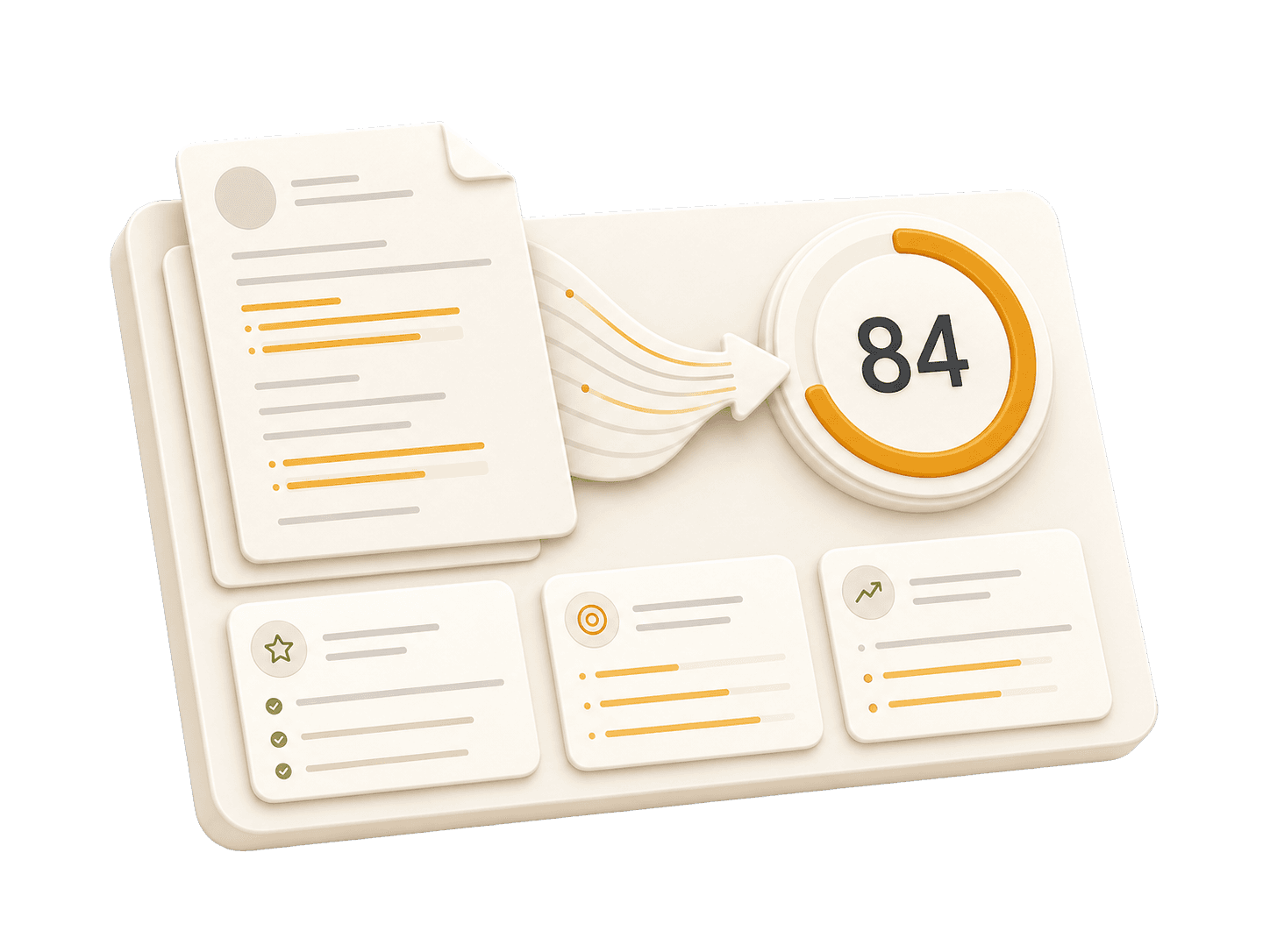
Add your resume to run a free score and get prioritized fixes.
Expert guidelines and best practices for each section of your resume.
01
First Name Last Name City, State, Zip Code Phone Number | Email Address LinkedIn Profile URL | Portfolio URL (Optional)
Your contact information is the first section recruiters see. Keep it concise and professional. Ensure your email address is appropriate (e.g., [email protected]). Include your LinkedIn profile for a comprehensive view of your professional journey. A portfolio or personal website is recommended for creative, technical, or design roles.
Do not include your full physical address (street number/name) for privacy reasons. Avoid including personal details like marital status, age, photo, or social security number unless specifically required in your country. Don't use unprofessional email addresses.
See clear examples of how to format contact details effectively.
John Doe 1234 Random St, Apt 56 New York, NY 10001 [email protected] github.com/aliciacode Single, 28 years old
John Doe New York, NY (555) 123-4567 | [email protected] linkedin.com/in/johndoe | github.com/johndoe | johndoe.dev
02
Professional Title Result-oriented [Role Name] with [Number] years of experience in [Key Skills/Industries]. Proven track record of [Major Achievement]. Skilled in [Key Technologies/Skills]. Committed to delivering [Specific Value] for [Target Industry/Company type].
A professional summary is your elevator pitch. It should be 3-5 sentences long, summarizing your experience, key skills, and major achievements. Tailor it to the job description by using relevant keywords. Focus on what makes you unique and the value you bring to potential employers.
Avoid generic objectives like 'Looking for a challenging role to grow my skills.' Recruiters want to know what value you bring to them, not what you want from them. Don't use first-person pronouns (I, me, my). Keep it concise and impactful.
Compare a weak objective with a strong professional summary.
Objective: I am a hard-working individual looking for a Director of Data Science position where I can learn new things and advance my career.
Senior Director of Data Science with 6+ years of experience in predictive analytics. Reduced data processing time by 45% through optimized machine learning pipelines. Expert in Apache Hadoop, TensorFlow, and AWS SageMaker.
03
Technical Skills - Languages: [List] - Frameworks: [List] - Tools: [List] Soft Skills - [Skill 1], [Skill 2], [Skill 3]
Group your skills logically (e.g., Languages, Frameworks, Tools). Focus on hard skills relevant to the job. List skills in order of proficiency or relevance. Soft skills are better demonstrated through bullet points in your experience section rather than a bare list.
Do not list skills you are not comfortable using in an interview. Avoid using progress bars or percentages to rate your skills (e.g., "Java: 80%"). Don't include outdated technologies unless specifically required.
Mentioning Java, Python, and C++ without context of proficiency or relevance
Listing Python, TensorFlow, AWS SageMaker under Tools section, showing relevance to data science projects
04
Job Title | Company Name | Location Month Year – Month Year - Action Verb + Context + Result (Quantified) - Led [Project] resulting in [Outcome]... - Collaborated with [Team] to implement [Feature]...
This is the core of your resume. Use reverse-chronological order (most recent first). Start each bullet with a strong action verb. Focus on achievements and impact, not just duties. Use numbers to quantify your impact (dollars, percentages, time saved, users affected). Show progression and increasing responsibility.
Avoid passive language like "Responsible for..." or "Tasked with...." Don't list every single daily task; focus on significant contributions and measurable outcomes. Avoid jargon that recruiters outside your field won't understand.
Practical example showing do's and don'ts for experiences
Managed team responsibilities, overseeing data scientists and analysts in various projects.
Led a team of 10 data scientists and ML engineers to launch retention and pricing models that improved targeted product revenue by 25%.
Worked on different data analysis tasks assigned by the management team.
Partnered with marketing and product leaders to redesign customer segmentation, improving campaign targeting and lifecycle reporting.
05
Degree Name | University Name | Location Month Year – Month Year - Relevant Coursework: [Course 1], [Course 2] - Honors/Awards: [Award Name] - GPA: X.X (if above 3.5)
List your highest degree first. If you have significant work experience, keep the education section brief. Include your GPA only if it is above 3.5 or if you are a recent graduate. Highlight relevant coursework, academic projects, honors, or leadership roles.
Do not include high school details if you have a college degree. Avoid listing every single course you took; select only the most relevant ones. Don't include graduation dates from decades ago if age discrimination is a concern in your field.
Bachelor of Arts | XYZ University, Anytown, CA September 2014 – June 2018 - Courses: Introduction to Psychology, World History, Calculus I, Linear Algebra, Data Structures and Algorithms
Master of Science in Computer Science with a focus on Data Science | Stanford University, Palo Alto, CA September 2013 – May 2017 - Relevant Coursework: Machine Learning, Big Data Analytics, Cloud Computing - Honors/Awards: Dean's List (Fall 2014) - GPA: 4.0
06
Project Name | Tools/Technologies Used - Briefly describe what you created and its purpose - Highlight specific challenges you solved - Link to portfolio or demo if available
Projects are excellent for demonstrating practical skills, especially if you lack work experience or are changing careers. Include a link to your portfolio or demo if possible. Focus on projects that show problem-solving skills and relevant tools for the target role.
Don't include trivial tutorials unless you significantly expanded on them. Avoid projects that are outdated, incomplete, or irrelevant to the role you're applying for. Don't just list technologies—explain what you created and why it matters.
Practical example showing do's and don'ts for projects
Built a basic CRUD app using React and Express. No specific goals were set, only generic web development tasks.
Designed and developed a real-time analytics dashboard for monitoring user engagement metrics using React, Node.js, and Elasticsearch. Implemented data visualization features to identify trends in user behavior.
Common questions about this role and how to best present it on your resume.
Show leadership scope, business outcomes, model delivery, data governance, and the teams or stakeholders you influenced. Senior resumes work best when technical depth is tied to measurable decisions, revenue, risk reduction, or operational speed.
Use realistic metrics, explain the business context, and make your role clear. A strong bullet connects the model or analytics work to an outcome without overstating what the algorithm alone accomplished.
Prioritize machine learning strategy, people leadership, Python, experimentation, MLOps, cloud platforms, data governance, stakeholder management, and analytics translation for non-technical teams.
Use reverse-chronological experience and make each role show broader ownership: individual modeling work, then project leadership, then strategy, hiring, governance, and executive partnership.
Create a professional, optimized resume in minutes. No design skills needed—just proven results.
3 out of 4 resumes never reach a human eye. Our keyword optimization increases your pass rate by up to 80%, ensuring recruiters actually see your potential.
