
Use this template
Add your own experience and make this layout yours.
Resume Example
Maya Patel
Entry-Level Automotive Engineer | EV Battery Systems
[email protected] | +1 (555) 456-7890 | linkedin.com/in/ella-martinez | github.com/emartinezengineering | emartinez.dev | Detroit, MI
Professional Summary
Entry-level automotive engineer focused on electric vehicle battery systems, test validation, and vehicle performance analysis. Brings hands-on experience with battery pack testing, CAD documentation, MATLAB/Simulink models, and Python data analysis from junior engineering and internship roles. Known for turning lab results into clear design recommendations that help cross-functional teams improve range, thermal performance, and manufacturability.
Work Experience
Entry Level Automotive Engineer
01/2024
BatteryTech Innovations
Detroit, MI
•
Tested lithium-ion battery pack layouts against voltage, thermal, and packaging requirements, documenting design tradeoffs for senior engineers.
•
Built MATLAB/Simulink thermal models that helped the team identify cooling adjustments before prototype builds.
•
Collaborated with six mechanical, electrical, and manufacturing engineers to prepare battery prototype documentation and reduce rework during builds.
•
Analyzed drive-cycle data in Python to compare energy-use patterns and recommend efficiency updates for prototype EV platforms.
Junior Automotive Engineer
06/2022 - 12/2023
AutoTech Solutions
Detroit, MI
•
Updated battery charging test procedures and summarized results that helped shorten standard validation cycles.
•
Investigated recurring battery performance issues by reviewing lab data, supplier notes, and warranty feedback, then proposed corrective actions for engineering review.
Intern - Automotive Engineering
06/2021 - 12/2021
Electric Mobility Group
Ann Arbor, MI
•
Assisted with CAD updates for a battery enclosure, balancing weight, service access, and mounting constraints.
•
Supported cycle-life testing by preparing fixtures, logging results, and flagging material changes that improved prototype durability.
Skills
Python, JavaScript, MATLAB, Simulink, CAD Software, Git, AWS, Docker
Education
Bachelor of Science in Mechanical Engineering
09/2021 - 12/2025
University of Technology
Detroit, MI
Projects
Battery Efficiency Analysis Tool
github.com/emartinezengineering/battery-efficiency-tool
Built a Python tool that compares EV battery test runs, flags efficiency losses, and exports charts engineers can use during design reviews. The project demonstrates practical data cleaning, charge-cycle analysis, and clear reporting for early-stage battery validation.
Battery Thermal Monitoring Prototype
Created a small thermal monitoring prototype using sensor data and simple prediction logic to identify overheating risk during simulated drive cycles. The project shows how software analysis can support safer battery design decisions.
Certifications
EV Battery Systems and Safety Coursework
06/2025
This resume format works well for ATS because it includes clear and concise professional summaries that highlight key skills and experiences relevant to an entry-level automotive engineer position. The use of action verbs and quantifiable achievements throughout the document helps in catching the attention of automated systems. Additionally, incorporating industry-specific keywords such as 'battery technology', 'electric vehicle engineering', and 'hardware integration' ensures that the resume is optimized for both ATS and human readers. The inclusion of a professional summary with a brief but comprehensive overview of skills and experience sets the stage for further detailed information in subsequent sections.
Instant Resume Score
Upload your resume for an instant ATS score and practical, role-specific improvements.
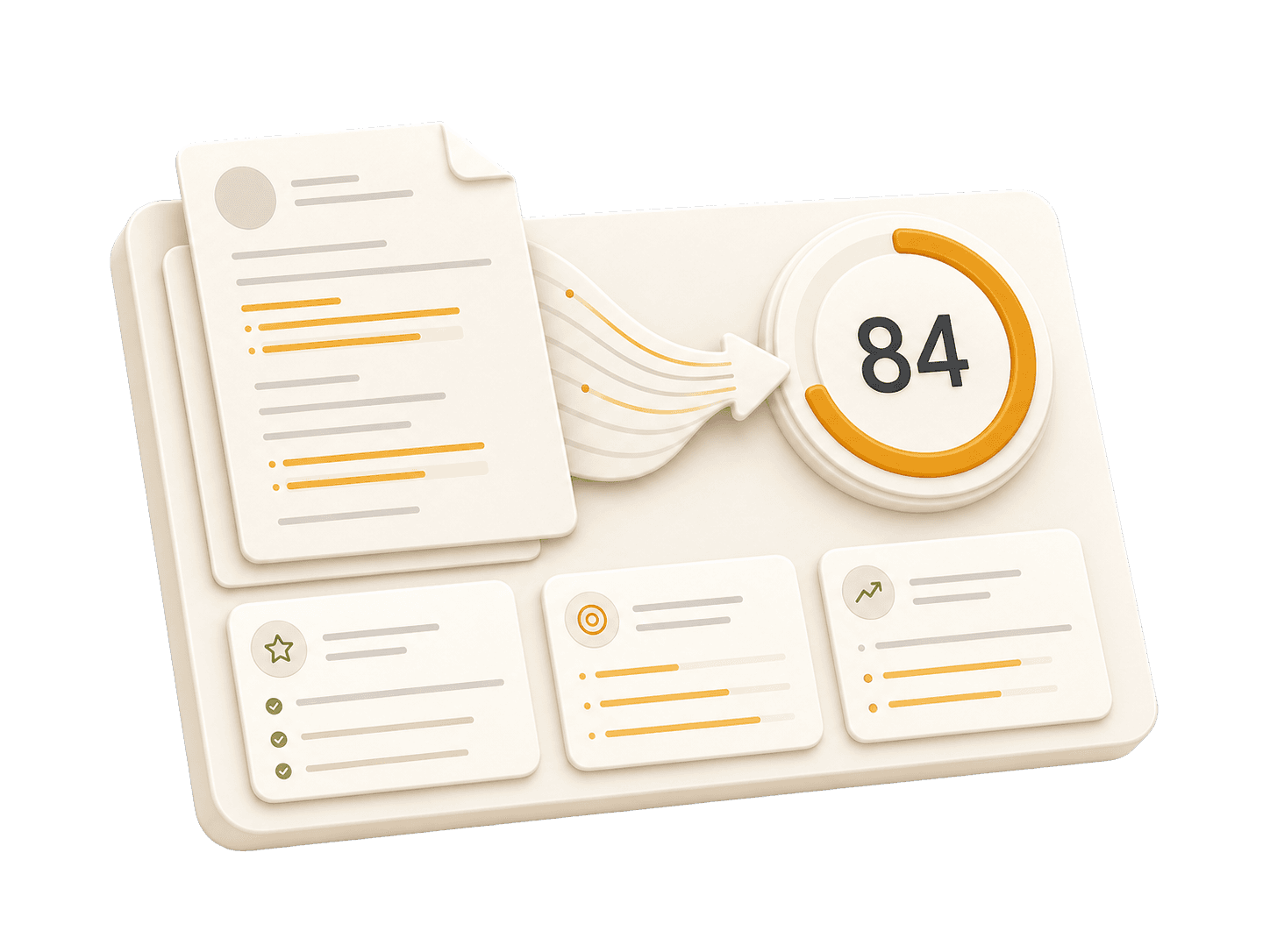
Add your resume to run a free score and get prioritized fixes.
Expert guidelines and best practices for each section of your resume.
01
First Name Last Name City, State, Zip Code Phone Number | Email Address LinkedIn Profile URL | Portfolio URL (Optional)
Your contact information is the first section recruiters see. Keep it concise and professional. Ensure your email address is appropriate (e.g., [email protected]). Include your LinkedIn profile for a comprehensive view of your professional journey. A portfolio or personal website is recommended for creative, technical, or design roles.
Do not include your full physical address (street number/name) for privacy reasons. Avoid including personal details like marital status, age, photo, or social security number unless specifically required in your country. Do not use unprofessional email addresses.
See clear examples of how to format contact details effectively.
John Doe 1234 Random St, Apt 56 New York, NY 10001 [email protected] github.com/aliciacode Single, 28 years old
John Doe New York, NY (555) 123-4567 | [email protected] linkedin.com/in/johndoe | github.com/johndoe | johndoe.dev
02
Professional Title Result-oriented [Role Name] with [Number] years of experience in [Key Skills/Industries]. Proven track record of [Major Achievement]. Skilled in [Key Technologies/Skills]. Committed to delivering [Specific Value] for [Target Industry/Company type].
A professional summary is your elevator pitch. It should be 3-5 sentences long, summarizing your experience, key skills, and major achievements. Tailor it to the job description by using relevant keywords. Focus on what makes you unique and the value you bring to potential employers.
Avoid generic objectives like 'Looking for a challenging role to grow my skills.' Recruiters want to know what value you bring to them, not what you want from them. Don't use first-person pronouns (I, me, my). Keep it concise and impactful.
Compare a weak objective with a strong professional summary.
Objective: I am a hard-working individual looking for an Entry Level Automotive Engineer position where I can learn new things and advance my career.
Entry-Level Mechanical Engineer specializing in electric vehicle battery systems. Expertise in advanced design, testing, and optimization techniques to enhance energy efficiency and performance. Proven track record of collaborating with cross-functional teams to develop innovative solutions.
Highlight specific achievements.
Objective: I am eager to join a dynamic team in the automotive industry to leverage my skills and contribute positively.
Entry-Level Automotive Engineer with 1 year of experience in developing battery technologies. Successfully implemented an energy management system that increased prototype EV efficiency by 20%. Proficient in CAD software, MATLAB/Simulink.
Showcase relevant skills and technology proficiency.
Objective: I am looking for an opportunity to work as an Entry Level Automotive Engineer where I can utilize my knowledge of mechanical engineering principles.
Entry-Level Mechanical Engineer with a focus on battery systems. Skilled in using Python, R, and MATLAB/Simulink for data analysis and system modeling. Dedicated to driving innovation in sustainable power solutions.
Demonstrate commitment to the industry.
Objective: I am a recent graduate seeking an entry-level position where I can gain hands-on experience in automotive engineering.
Entry-Level Electric Vehicle Battery Specialist with over 2 years of experience in developing advanced battery technologies. Collaborated on projects that improved vehicle range and efficiency, saving $20K in material costs.
03
Technical Skills - Languages: [List] - Frameworks: [List] - Tools: [List] Soft Skills - [Skill 1], [Skill 2], [Skill 3]
Group your skills logically (e.g., Languages, Frameworks, Tools). Focus on hard skills relevant to the job. List skills in order of proficiency or relevance. Soft skills are better demonstrated through bullet points in your experience section rather than a bare list.
Do not list skills you are not comfortable using in an interview. Avoid using progress bars or percentages to rate your skills (e.g., "Java: 80%") as they are subjective and often misinterpreted. Don't include outdated technologies unless specifically required.
Practical example showing do's and don'ts for skills
MATLAB: 75%, Python: 90%, JavaScript: basic knowledge, R: not proficient
Python - Proficient, MATLAB/Simulink - Skilled, CAD Software - Experienced
Communication skills, problem-solving, teamwork, leadership, time management
Collaboration with cross-functional teams to develop innovative solutions for battery systems; Efficiently managed project timelines and resources.
04
Job Title | Company Name | Location Month Year – Month Year - Action Verb + Context + Result (Quantified) - Led [Project] resulting in [Outcome]... - Collaborated with [Team] to implement [Feature]...
This is the core of your resume. Use reverse-chronological order (most recent first). Start each bullet with a strong action verb. Focus on achievements and impact, not just duties. Use numbers to quantify your impact (dollars, percentages, time saved, users affected). Show progression and increasing responsibility.
Avoid passive language like "Responsible for..." or "Tasked with...." Don't list every single daily task; focus on significant contributions and measurable outcomes. Avoid jargon that recruiters outside your field won't understand.
Practical example showing do's and don'ts for experiences
Responsible for testing battery packs in the lab.
Conducted comprehensive tests on battery packs, identifying key performance parameters and recommending improvements.
Participated in a team that worked on optimizing charging protocols.
Led the optimization of EV battery charging protocols, reducing charge time by 15% for standard models.
05
Degree Name | University Name | Location Month Year – Month Year - Relevant Coursework: [Course 1], [Course 2] - Honors/Awards: [Award Name] - GPA: X.X (if above 3.5)
List your highest degree first. If you have significant work experience, keep the education section brief. Include your GPA only if it is above 3.5 or if you are a recent graduate. Highlight relevant coursework, academic projects, honors, or leadership roles.
Do not include high school details if you have a college degree. Avoid listing every single course you took; select only the most relevant ones. Don't include graduation dates from decades ago if age discrimination is a concern in your field.
Practical example showing do's and don'ts for educations
Bachelor of Arts | XYZ University, Chicago, IL September 2018 – May 2022 - Courses: History, Literature, Psychology, Physics, Chemistry, Mathematics, Fine Art, Philosophy
Bachelor of Science in Mechanical Engineering | University of Technology, Detroit, MI September 2021 – December 2025 - Relevant Coursework: Vehicle Dynamics, Energy Systems, Materials Science
06
Project Name | Technologies Used - Briefly describe what you built and its purpose - Highlight a specific technical challenge you solved - Link to GitHub or live demo if available
Projects are excellent for demonstrating practical skills, especially if you lack work experience or are changing careers. Include a link to the GitHub repo or live demo if possible. Focus on projects that show problem-solving skills and relevant technologies for the target role.
Don't include trivial tutorials unless you significantly expanded on them. Avoid projects that are outdated, incomplete, or irrelevant to the role you're applying for. Don't just list technologies—explain what you built and why it matters.
Practical example showing do's and don'ts for projects
Built a basic battery pack using online tutorials - Learned about battery components from following step-by-step guides - Used common materials and standard tools - No specific challenges faced or problems solved
Developed an advanced battery efficiency optimization tool in Python - Created algorithms to analyze real-time data from electric vehicle batteries - Overcame challenge of integrating multiple data sources for comprehensive analysis - Reduced energy consumption by optimizing charging protocols
Common questions about this role and how to best present it on your resume.
Focus on hands-on engineering work: CAD models, lab testing, vehicle systems, MATLAB or Python analysis, internships, and academic projects tied to real automotive problems.
Use project and internship results. Explain the problem, the tool or method you used, and the engineering outcome, even when the outcome is a prototype, test result, or design recommendation.
Include relevant terms such as battery testing, vehicle dynamics, CAD, MATLAB/Simulink, Python, thermal management, validation, data analysis, and cross-functional engineering.
Yes. Projects can prove practical skill when your work history is short, especially if they show testing, simulation, design tradeoffs, or a working prototype.
Transform your resume into an interview magnet with AI-powered optimization trusted by job seekers worldwide.
The average job seeker spends 3+ hours formatting a resume. Our AI does it in under 15 minutes, getting you to the application phase 12x faster.
