
Use this template
Add your own experience and make this layout yours.
Resume Example
This resume format is highly effective for ATS (Applicant Tracking Systems) because it utilizes clear section headers like 'Professional Summary,' 'Skills,' and 'Experience' which are commonly recognized by these systems. Including specific keywords such as 'emergency response' and 'safety training' helps the applicant's qualifications be more visible to automated screening software, thus increasing their chances of being seen by human recruiters.
Moreover, the format emphasizes achievements and responsibilities in previous roles using bullet points, making it easy for ATS systems to parse the information. By focusing on quantifiable results like successfully managing a mid-flight medical crisis or ensuring passenger safety during turbulent flights, the resume not only looks impressive but also contains relevant keywords that are critical for passing through initial screening stages.
Instant Resume Score
Upload your resume for an instant ATS score and practical, role-specific improvements.
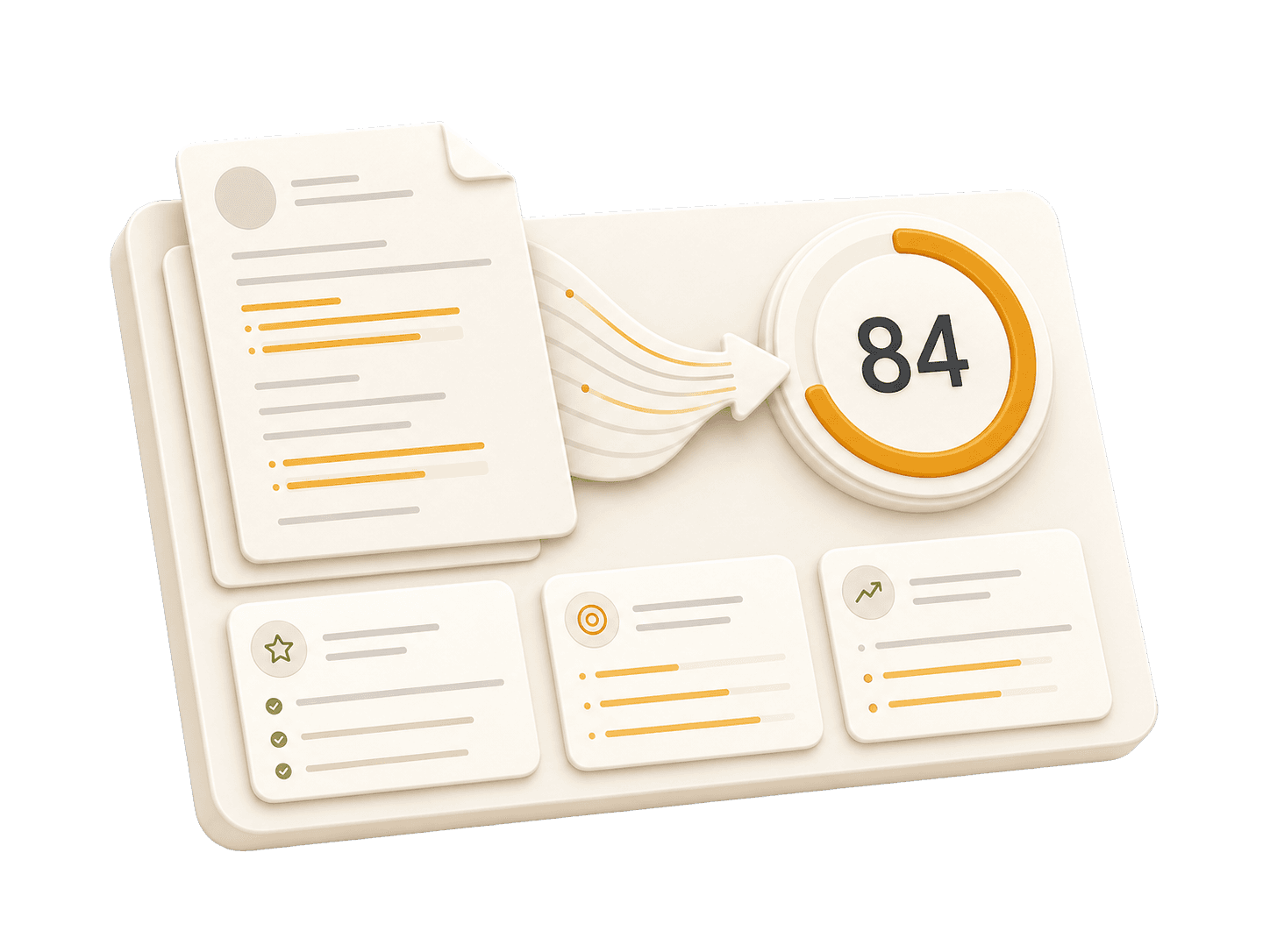
Add your resume to run a free score and get prioritized fixes.
Expert guidelines and best practices for each section of your resume.
01
First Name Last Name City, State, Zip Code Phone Number | Email Address LinkedIn Profile URL | Portfolio URL (Optional)
Your contact information is the first section recruiters see. Keep it concise and professional. Ensure your email address is appropriate (e.g., [email protected]). Include your LinkedIn profile for a comprehensive view of your professional journey. A portfolio or personal website is recommended for creative, technical, or design roles.
Do not include your full physical address (street number/name) for privacy reasons. Avoid including personal details like marital status, age, photo, or social security number unless specifically required in your country. Don't use unprofessional email addresses.
See clear examples of how to format contact details effectively.
Lila Martinez 1234 Peachtree St, Apt 56 Atlanta, GA 30318 [email protected]
Lila Martinez Atlanta, GA (555) 987-6543 | [email protected] linkedin.com/in/lila-martinez
02
Professional Title Result-oriented [Role Name] with [Number] years of experience in [Key Skills/Industries]. Proven track record of [Major Achievement]. Skilled in [Key Technologies/Skills]. Committed to delivering [Specific Value] for [Target Industry/Company type].
A professional summary is your elevator pitch. It should be 3-5 sentences long, summarizing your experience, key skills, and major achievements. Tailor it to the job description by using relevant keywords. Focus on what makes you unique and the value you bring to potential employers.
Avoid generic objectives like 'Looking for a challenging role to grow my skills.' Recruiters want to know what value you bring to them, not what you want from them. Don't use first-person pronouns (I, me, my). Keep it concise and impactful.
Compare a weak objective with a strong professional summary.
Objective: I am a hard-working individual looking for a Flight Attendant position where I can learn new things and advance my career.
Senior flight attendant with 7+ years of experience in passenger safety, emergency response, and cabin service. Trained new crew members on safety checks and international service standards while maintaining calm communication during medical and weather-related disruptions.
03
Aviation Safety - Emergency procedures, evacuation support, first aid/CPR, safety equipment checks Passenger Service - Conflict resolution, boarding support, accessibility assistance, multilingual communication Crew Operations - Pre-flight briefings, regulatory compliance, new-hire training, incident documentation
Group skills around aviation safety, passenger service, and crew operations. Prioritize skills that match the airline role and support them with evidence in your experience bullets.
Do not list skills you are not comfortable using in an interview. Avoid using progress bars or percentages to rate your skills (e.g., "Java: 80%"). Do not include outdated technologies unless specifically required.
Practical example showing do's and don'ts for skills
Fire safety training: Completed but rusty. Emergency protocols: Familiar, yet infrequent practice.
Emergency Procedures: Expertise in emergency procedures and evacuation plans.
CPR certification expired last year; needs renewal soon.
First Aid & CPR Certification: Up-to-date training and proficiency in first aid techniques.
04
Job Title | Company Name | Location Month Year – Month Year - Action Verb + Context + Result (Quantified) - Led [Project] resulting in [Outcome]... - Collaborated with [Team] to implement [Feature]...
This is the core of your resume. Use reverse-chronological order (most recent first). Start each bullet with a strong action verb. Focus on achievements and impact, not just duties. Use numbers to quantify your impact (dollars, percentages, time saved, users affected). Show progression and increasing responsibility.
Avoid passive language like "Responsible for..." or "Tasked with...." Don't list every single daily task; focus on significant contributions and measurable outcomes. Avoid jargon that recruiters outside your field won't understand.
Practical example showing do's and don'ts for experiences
Responsible for serving passengers, ensuring their safety during flights, managing cabin services, and completing paperwork accurately.
Managed cabin operations, ensuring the safety and comfort of 150+ passengers per flight through meticulous pre-flight checks and in-flight monitoring.
Performed regular training sessions for new hires on emergency protocols and customer service skills.
Trained 35 new flight attendants on emergency procedures and international regulatory compliance, resulting in a 20% reduction in safety violations.
05
Degree Name | University Name | Location Month Year – Month Year - Relevant Coursework: [Course 1], [Course 2] - Honors/Awards: [Award Name] - GPA: X.X (if above 3.5)
List your highest degree first. If you have significant work experience, keep the education section brief. Include your GPA only if it is above 3.5 or if you are a recent graduate. Highlight relevant coursework, academic projects, honors, or leadership roles.
Do not include high school details if you have a college degree. Avoid listing every single course you took; select only the most relevant ones. Don't include graduation dates from decades ago if age discrimination is a concern in your field.
Practical example showing do's and don'ts for educations
Bachelor of Arts | University of Anywhere, Anytown September 2013 - May 2017 - Coursework: English Composition, Introduction to Psychology, History of Film, etc. - GPA: 3.2
Bachelor’s Degree in Aviation Management & Safety | Georgia Institute of Technology, Atlanta September 2013 – May 2017 - Relevant Coursework: Aviation Regulations and Compliance, Emergency Response Techniques, Customer Service Excellence. - GPA: 3.8
06
Project Name | Tools/Technologies Used - Briefly describe what you created and its purpose - Highlight specific challenges you solved - Link to portfolio or demo if available
Projects are optional for most flight attendant resumes. Use this section only for relevant service, safety, training, volunteer, or travel operations work that strengthens your application.
Don't include trivial tutorials unless you significantly expanded on them. Avoid projects that are outdated, incomplete, or irrelevant to the role you're applying for. Don't just list technologies—explain what you created and why it matters.
Practical example showing do's and don'ts for projects
Built a basic website using HTML/CSS/JavaScript that lists my favorite airlines. No functionality beyond aesthetics, outdated design.
Developed an interactive travel safety app in React.js to provide travelers with real-time safety information and emergency contact numbers for global destinations.
Created a simple flight tracker using Python and Flask but never tested it thoroughly or made it public.
Designed and implemented a passenger feedback system using Django, which allows passengers to rate their flight experiences in real time and offers suggestions based on their input.
Common questions about this role and how to best present it on your resume.
Emphasize passenger safety, emergency procedures, customer service, crew coordination, training, and any language or compliance experience relevant to airline work.
Use action verbs and specific context, such as handling medical incidents, supporting boarding, calming passengers during delays, or training new crew members.
Include current first aid, CPR, safety, or airline training when applicable. Avoid listing expired credentials unless you are actively renewing them.
Briefly show relevant training, customer service work, language study, caregiving, volunteering, or other experience that kept your communication and service skills active.
In minutes, create a tailored, ATS-friendly resume proven to land 6X more interviews.
Candidates who tailor their resumes to the job description get 2.5x more interviews. Use our AI to auto-tailor your CV for every single application instantly.