
Use this template
Add your own experience and make this layout yours.
Resume Example
This resume format is designed to optimize ATS (Applicant Tracking Systems) and human readability for fresher network engineers focusing on cybersecurity. The inclusion of relevant technical skills, certifications in the early stages of a career, and a professional summary tailored towards entry-level positions ensures that job seekers stand out among applicants. Using specific keywords related to cybersecurity and network engineering helps pass initial screening by ATS software.
Instant Resume Score
Upload your resume for an instant ATS score and practical, role-specific improvements.
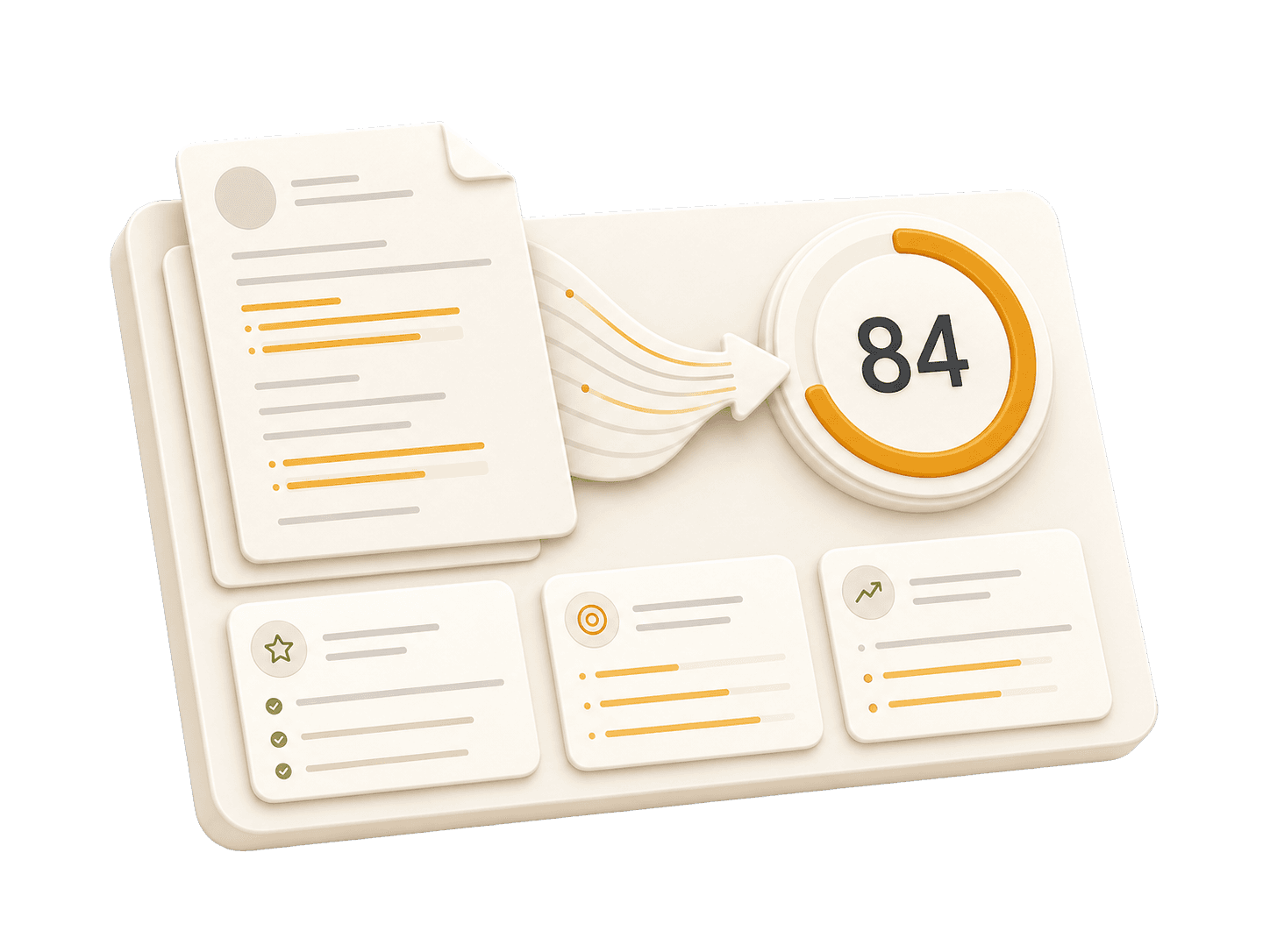
Add your resume to run a free score and get prioritized fixes.
Expert guidelines and best practices for each section of your resume.
01
First Name Last Name City, State, Zip Code Phone Number | Email Address LinkedIn Profile URL | Portfolio URL (Optional)
Your contact information is the first section recruiters see. Keep it concise and professional. Ensure your email address is appropriate (e.g., [email protected]). Include your LinkedIn profile for a comprehensive view of your professional journey. A portfolio or personal website is recommended for creative, technical, or design roles.
Do not include your full physical address (street number/name) for privacy reasons. Avoid including personal details like marital status, age, photo, or social security number unless specifically required in your country. Don't use unprofessional email addresses.
See clear examples of how to format contact details effectively.
Alex Martinez 1234 Main St, Apt 56 San Francisco, CA 94105 [email protected] github.com/amnetworks
Alex Martinez San Francisco, CA (555) 987-6543 | [email protected] linkedin.com/in/alex-martinez-network-engineer | github.com/amnetworks
02
Professional Title Result-oriented [Role Name] with [Number] years of experience in [Key Skills/Industries]. Proven track record of [Major Achievement]. Skilled in [Key Technologies/Skills]. Committed to delivering [Specific Value] for [Target Industry/Company type].
A professional summary is your elevator pitch. It should be 3-5 sentences long, summarizing your experience, key skills, and major achievements. Tailor it to the job description by using relevant keywords. Focus on what makes you unique and the value you bring to potential employers.
Avoid generic objectives like 'Looking for a challenging role to grow my skills.' Recruiters want to know what value you bring to them, not what you want from them. Don't use first-person pronouns (I, me, my). Keep it concise and impactful.
Compare a weak objective with a strong professional summary.
Objective: I am a hard-working individual looking for a Fresher Network Engineer position where I can learn new things and advance my career.
Cybersecurity-focused fresher network engineer with 4+ years of experience in designing secure networks. Successfully identified and mitigated critical security vulnerabilities across multiple networks, enhancing system resilience by implementing advanced intrusion detection systems (IDS) and firewalls. Proficient in Python for scripting security tools.
03
Technical Skills - Languages: [List] - Frameworks: [List] - Tools: [List] Soft Skills - [Skill 1], [Skill 2], [Skill 3]
Group your skills logically (e.g., Languages, Frameworks, Tools). Focus on hard skills relevant to the job. List skills in order of proficiency or relevance. Soft skills are better demonstrated through bullet points in your experience section rather than a bare list.
Do not list skills you are not comfortable using in an interview. Avoid using progress bars or percentages to rate your skills (e.g., "Java: 80%"). Don't include outdated technologies unless specifically required.
Practical example showing do's and don'ts for skills
JavaScript: Beginner level
JavaScript
SolarWinds: Limited experience
SolarWinds Network Monitoring Software
04
Job Title | Company Name | Location Month Year – Month Year - Action Verb + Context + Result (Quantified) - Led [Project] resulting in [Outcome]... - Collaborated with [Team] to implement [Feature]...
This is the core of your resume. Use reverse-chronological order (most recent first). Start each bullet with a strong action verb. Focus on achievements and impact, not just duties. Use numbers to quantify your impact (dollars, percentages, time saved, users affected). Show progression and increasing responsibility.
Avoid passive language like "Responsible for..." or "Tasked with...". Don't list every single daily task; focus on significant contributions and measurable outcomes. Avoid jargon that recruiters outside your field won't understand.
Practical example showing do's and don'ts for experiences
Maintained network logs, updated firewall rules as needed.
Monitored network traffic, identified and mitigated potential security threats, reducing downtime by 25%.
Set up new office equipment with cables and configurations.
Configured and tested network switches for a new office launch, ensuring seamless connectivity for overdevicesout downtime.
05
Degree Name | University Name | Location Month Year – Month Year - Relevant Coursework: [Course 1], [Course 2] - Honors/Awards: [Award Name] - GPA: X.X (if above 3.5)
List your highest degree first. If you have significant work experience, keep the education section brief. Include your GPA only if it is above 3.5 or if you are a recent graduate. Highlight relevant coursework, academic projects, honors, or leadership roles.
Do not include high school details if you have a college degree. Avoid listing every single course you took; select only the most relevant ones. Don't include graduation dates from decades ago if age discrimination is a concern in your field.
Practical example showing do's and don'ts for educations
Bachelor of Science | University Name | Location September 2013 – May 2017 - Relevant Coursework: Introduction to Programming, Database Management Systems, Calculus I-III, Physics I-II, English Composition, Music Appreciation
Bachelor of Science in Information Technology with a Focus on Cybersecurity | California State University, San Francisco | San Francisco, CA September 2013 – May 2017 - Relevant Coursework: Network Security, Cryptography, Secure Software Development - Honors/Awards: Dean's List for Academic Excellence
06
Project Name | Technologies Used - Briefly describe what you built and its purpose - Highlight a specific technical challenge you solved - Link to GitHub or live demo if available
Projects are excellent for demonstrating practical skills, especially if you lack work experience or are changing careers. Include a link to the GitHub repo or live demo if possible. Focus on projects that show problem-solving skills and relevant technologies for the target role.
Don't include trivial tutorials unless you significantly expanded on them. Avoid projects that are outdated, incomplete, or irrelevant to the role you're applying for. Don't just list technologies—explain what you built and why it matters.
Practical example showing do's and don'ts for projects
Built a basic firewall using Python to block certain IP addresses on my local network. Used simple if-else statements to check incoming traffic.
Developed an advanced intrusion detection system (IDS) in Python that uses machine learning algorithms to detect and block malicious traffic patterns, enhancing the security of a simulated corporate network environment.
Common questions about this role and how to best present it on your resume.
Essential skills include basic knowledge of networking protocols, familiarity with network devices like routers and switches, understanding of cybersecurity basics, and proficiency in troubleshooting common issues.
Highlight your willingness to learn and grow in a fresher role. Emphasize specific skills relevant to the entry-level position and mention any certifications or projects that align with the job description.
Yes, including personal projects demonstrates initiative and practical experience, even if you are new to the field.
Consider basic certifications like CompTIA Network+ or Cisco Certified Entry Networking Technician (CCENT) to validate your skills and knowledge.
In minutes, create a tailored, ATS-friendly resume proven to land 6X more interviews.
The average job seeker spends 3+ hours formatting a resume. Our AI does it in under 15 minutes, getting you to the application phase 12x faster.