
Use this template
Add your own experience and make this layout yours.
Resume Example
This professional template is specifically designed to showcase the skills and expertise of a UX Designer with a focus on accessibility and inclusivity. The format is tailored to attract both hiring managers and automated applicant tracking systems (ATS). The use of clear, concise language for job responsibilities and achievements ensures that key terms are highlighted without overwhelming detail, making it easy for ATS software to parse the information effectively.
Furthermore, the inclusion of a professional summary and relevant keywords specific to UX design roles enhances visibility in job board searches. By integrating industry-specific terminology such as 'accessibility focused' and 'inclusive design', the resume aligns well with search algorithms that prioritize these terms. This strategic approach ensures that the candidate's unique value proposition is communicated clearly, increasing their chances of being noticed by recruiters who are actively seeking professionals with a strong background in inclusive digital product development.
Instant Resume Score
Upload your resume for an instant ATS score and practical, role-specific improvements.
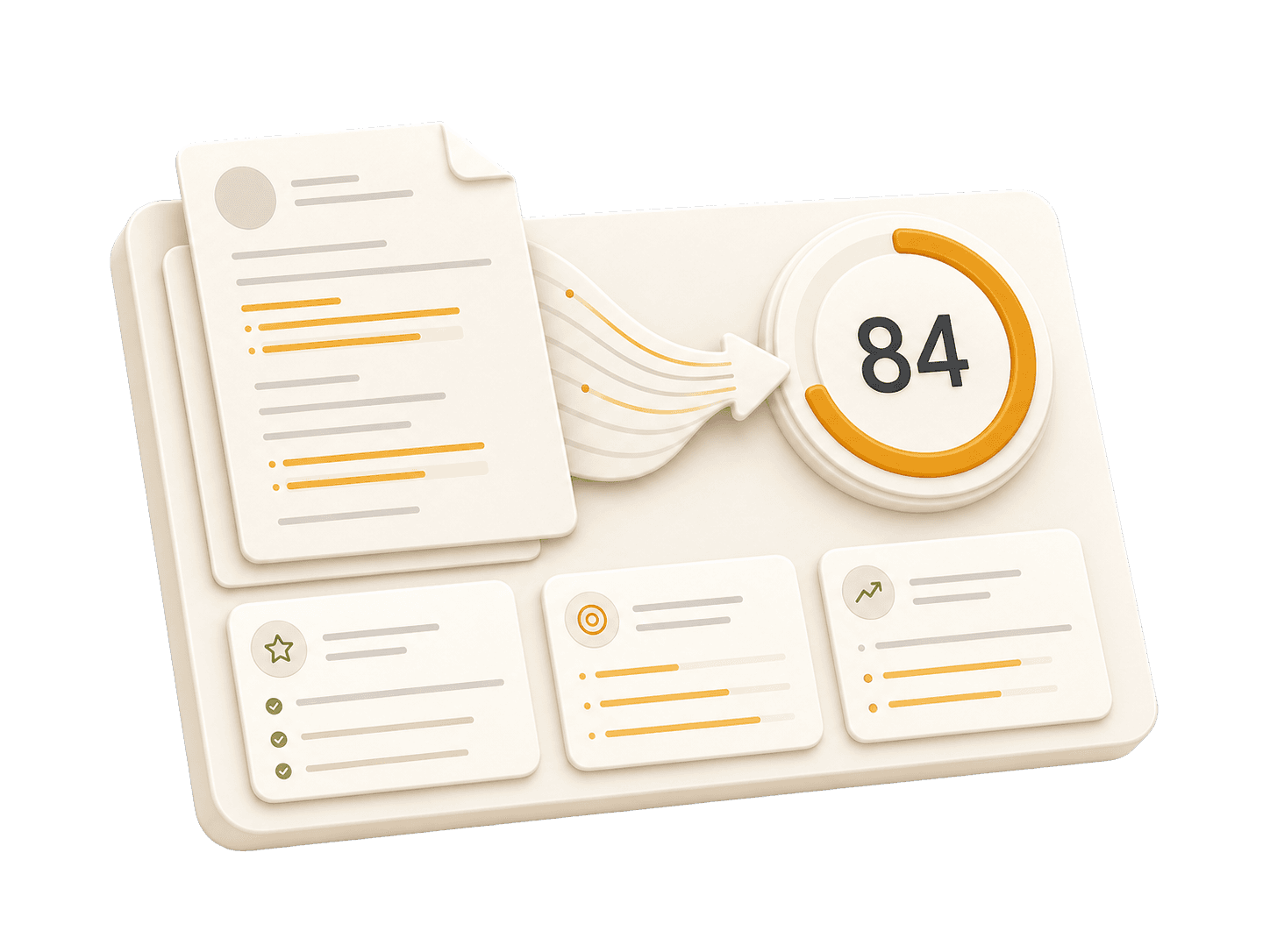
Add your resume to run a free score and get prioritized fixes.
Expert guidelines and best practices for each section of your resume.
01
First Name Last Name City, State, Zip Code Phone Number | Email Address LinkedIn Profile URL | Portfolio URL (Optional)
Your contact information is the first section recruiters see. Keep it concise and professional. Ensure your email address is appropriate (e.g., [email protected]). Include your LinkedIn profile for a comprehensive view of your professional journey. A portfolio or personal website is recommended for creative, technical, or design roles.
Do not include your full physical address (street number/name) for privacy reasons. Avoid including personal details like marital status, age, photo, or social security number unless specifically required in your country. Do NOT use unprofessional email addresses and do NOT include GitHub links for artists - use ArtStation, Behance, or portfolio sites instead.
John Doe 1234 Random St, Apt 56 New York, NY 10001 [email protected] github.com/aliciacode Single, 28 years old
Alicia Chen Los Angeles, CA (555) 123-4567 | [email protected] linkedin.com/in/aliciachen | artstation.com/aliciachen
02
Professional Title Result-oriented [Role Name] with [Number] years of experience in [Key Skills/Industries]. Proven track record of [Major Achievement]. Skilled in [Key Technologies/Skills]. Committed to delivering [Specific Value] for [Target Industry/Company type].
A professional summary is your elevator pitch. It should be 3-5 sentences long, summarizing your experience, key skills, and major achievements. Tailor it to the job description by using relevant keywords. Focus on what makes you unique and the value you bring to potential employers.
Avoid generic objectives like 'Looking for a challenging role to grow my skills.' Recruiters want to know what value you bring to them, not what you want from them. Don't use first-person pronouns (I, me, my). Keep it concise and impactful.
Compare a weak objective with a strong professional summary.
Objective: I am a hard-working individual looking for a UX Designer position where I can learn new things and advance my career.
Senior UX Designer with 6+ years of experience in inclusive design. Reduced user errors by 40% on critical tasks through improved navigation systems. Expert in WCAG 2.1+, AXE by Deque Systems, and ARIA roles.
Highlight key achievements and skills
Objective: To join a team that values innovation and creativity where I can contribute my UX design abilities.
Accessibility-focused UX Designer with over 5 years of experience in developing inclusive digital products. Developed an accessible e-commerce platform, enhancing usability for users with disabilities and increasing customer satisfaction ratings by 30%. Proficient in user research, interaction design, and prototyping tools.
Showcase leadership roles
Objective: To utilize my skills as a UX Designer to improve the overall user experience on digital platforms.
Senior UX Designer leading accessibility initiatives at Digital Product Design Studio. Trained internal teams and conducted workshops for external clients, improving website accessibility by 95% according to WCAG guidelines.
03
Technical Skills - Languages: [List] - Frameworks: [List] - Tools: [List] Soft Skills - [Skill 1], [Skill 2], [Skill 3]
Group your skills logically (e.g., Languages, Frameworks, Tools). Focus on hard skills relevant to the job. List skills in order of proficiency or relevance. Soft skills are better demonstrated through bullet points in your experience section rather than a bare list.
Do not list skills you are not comfortable using in an interview. Avoid using progress bars or percentages to rate your skills (e.g., "Java: 80%") as they are subjective and often misinterpreted. Don't include outdated technologies unless specifically required.
Practical example showing do's and don'ts for skills
HTML5, CSS3: Proficient (80%), JavaScript, React.js, Sketch, Adobe XD; Soft Skills: Team Collaboration, Time Management.
Languages: HTML5, CSS3, JavaScript Frameworks: React.js Tools: Sketch, Adobe XD Soft Skills: Strong team collaboration and time management.
04
Job Title | Company Name | Location Month Year – Month Year - Action Verb + Context + Result (Quantified) - Led [Project] resulting in [Outcome]... - Collaborated with [Team] to implement [Feature]...
This is the core of your resume. Use reverse-chronological order (most recent first). Start each bullet with a strong action verb. Focus on achievements and impact, not just duties. Use numbers to quantify your impact (dollars, percentages, time saved, users affected). Show progression and increasing responsibility.
Avoid passive language like "Responsible for..." or "Tasked with...". Don't list every single daily task; focus on significant contributions and measurable outcomes. Avoid jargon that recruiters outside your field won't understand.
Practical example showing do's and don'ts for experiences
Implemented features in the product, including new user interface elements. This helped to improve usability significantly.
Created wireframes for 25+ screens, ensuring a consistent user flow and reducing development rework by 30%
05
Degree Name | University Name | Location Month Year – Month Year - Relevant Coursework: [Course 1], [Course 2] - Honors/Awards: [Award Name] - GPA: X.X (if above 3.5)
List your highest degree first. If you have significant work experience, keep the education section brief. Include your GPA only if it is above 3.5 or if you are a recent graduate. Highlight relevant coursework, academic projects, honors, or leadership roles.
Do not include high school details if you have a college degree. Avoid listing every single course you took; select only the most relevant ones. Don't include graduation dates from decades ago if age discrimination is a concern in your field.
Practical example showing do's and don'ts for educations
Bachelor of Fine Arts | XYZ University | San Francisco, CA September 2013 – May 2017 - Coursework: Art History I, Painting Techniques, Digital Media Production, Introduction to Web Design
Bachelor of Science in Human-Computer Interaction (HCI) | San Francisco State University | San Francisco, CA September 2013 – May 2017 - Relevant Coursework: User Interface Design, Accessibility and Inclusive Design, Usability Engineering
06
Project Name | Tools/Software Used - Briefly describe what you created and its purpose - Highlight creative challenges you solved - Link to portfolio (ArtStation, Behance, Vimeo, YouTube) if available
Projects are excellent for demonstrating practical skills, especially if you lack work experience or are changing careers. Include a link to your portfolio (ArtStation, Behance, Vimeo, or YouTube) if possible. Focus on projects that show your creative abilities and relevant tools for the target role.
Don't include trivial tutorials unless you significantly expanded on them. Avoid projects that are outdated, incomplete, or irrelevant to the role you're applying for. Don't just list tools—explain what you created and why it matters. Do NOT mention GitHub links for creative roles - use portfolio platforms instead.
Practical example showing do's and don'ts for projects
Created a basic landing page using HTML and CSS, following tutorial steps exactly without any modifications or personal additions.
Designed an interactive user onboarding process for a web application, utilizing Sketch and InVision to create engaging prototypes that improved user engagement by 25%.
Common questions about this role and how to best present it on your resume.
Essential skills include user research, interaction design, prototyping, and usability testing.
Highlight transferable skills and recent projects to demonstrate current relevance.
Yes, including a direct link to your portfolio showcases your best work visually.
List specific tools like Sketch, Figma, and Adobe XD with brief descriptions of tasks accomplished using them.
Transform your resume into an interview magnet with AI-powered optimization trusted by job seekers worldwide.
Job seekers using professional, AI-enhanced resumes land roles in an average of 5 weeks compared to the standard 10. Stop waiting and start interviewing.